








Smile Design Course in India for NRI Dentists and Foreign Dentists
Thinking about upgrading your cosmetic skills without leaving your clinical roots behind? Read this before you book a single flight.
If you practise abroad and keep wondering how to add high-value cosmetic work to your skill set, a smile design course in India for NRI dentists may be the most practical answer. India offers something many overseas programmes struggle to match: a steady flow of real patients, close mentoring and a learning pace that fits a working dentist’s calendar. In this guide you will see what to expect, what to ask, and how to pick a programme that genuinely changes the way you treat.
Why NRI and Foreign Dentists Are Looking Toward India
Many dentists trained overseas say the same thing: theory is plentiful, but chairside exposure to cosmetic cases is limited. India has become a natural destination for smile designing training in India for NRI dentists because patient volume is high and case variety is wide. You may see everything from minor diastema closure to full-mouth aesthetic rehabilitation in a single week.
Cost is the second reason. Training, accommodation and travel together often work out lighter than a comparable hands-on course in North America, the UK or Australia. For dentists of Indian origin, there is also the comfort of language, food and culture, which makes a short stay far less stressful and lets you focus on the work.
What Exactly Is Smile Designing?
Smile designing is the process of planning a patient’s smile by studying the face, lips, gum line, tooth proportions and bite together. The final result may include laminates, crowns, whitening, gum contouring or a mix of these. The skill lies in deciding what to do, in what order and why.
This matters for your income and reputation. Patients rarely walk in asking for a treatment plan; they say, “I want my smile to look better.” A dentist who can translate that wish into a clear, digital or mock-up based plan earns trust quickly, and trust is what converts consultations into accepted treatment.
What a Good Smile Designing Course Should Cover
Not every programme is built the same. A solid curriculum should balance planning, clinical steps and patient communication, so that you leave with a repeatable workflow rather than a certificate alone.
Core Clinical Modules
Facial and Dental Analysis
Learn how to read facial midline, smile arc, buccal corridors and gum display, so every plan starts from the patient’s face rather than a tooth chart.
Tooth Preparation Principles
Understand minimal and no-prep approaches, depth control and when conservative options are not enough.
Mock-Up and Provisionalisation
See how a trial smile helps patients say yes with confidence and keeps you from redoing work.
Shade Selection and Material Choice
Compare ceramics, composite and zirconia for different budgets and clinical situations.
Practice-Building Modules
Photography and Case Documentation
Standard photo sets help you plan, communicate with the lab and build a portfolio.
Patient Communication and Case Acceptance
Learn simple scripts for explaining options, pricing and expectations without sounding pushy.
Choosing the Right Level: Foundation, Advanced or Fellowship
Your experience decides your starting point. A recent graduate and a ten-year practitioner do not need the same programme, and a good academy will tell you so honestly.
If cosmetic work is new to you, a foundation level smile designing course builds your base in diagnosis, preparation and delivery. If you already place veneers and want to handle complex, high-expectation cases, the advanced smile designing programme pushes you into full-smile planning and predictable outcomes.
For those who want long mentoring and a larger volume of supervised cases, the fellowship route offers the deepest immersion. Whichever you pick, ask how many live cases you will personally treat, not just watch.
Cosmetic Dentistry Course in India for International Dentists: Hands-On or Observation?
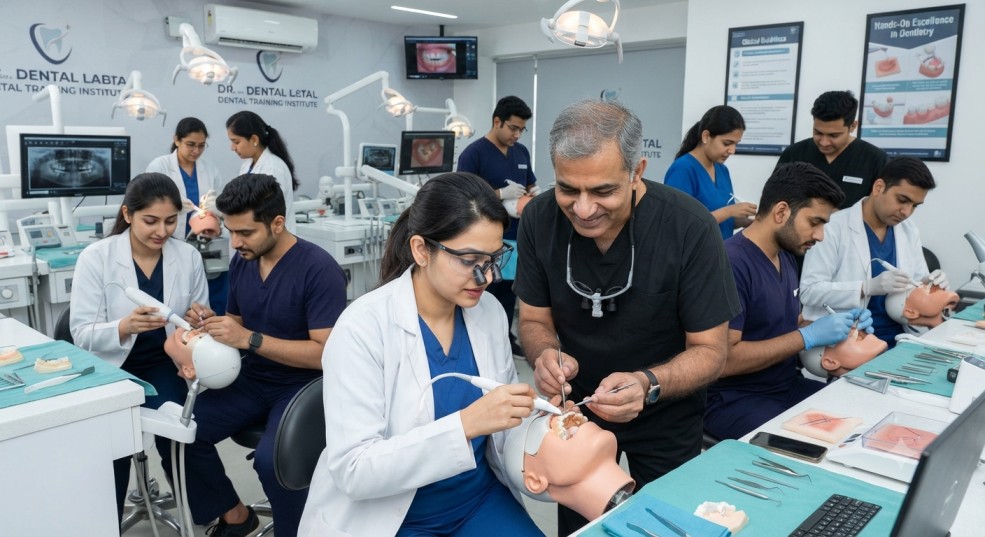
A cosmetic dentistry course in India for international dentists can be delivered in very different ways. Some programmes are lecture heavy with demonstrations, while others put you at the chair with patients under supervision. Both have value, but they lead to different results.
Before enrolling, ask three things. How many participants share one mentor? Will you work on patients or models? And how are cases planned and reviewed afterwards? Honest answers tell you quickly whether the course will build skill or only knowledge.
Remember that what you may legally perform on patients depends on your registration and the rules in force, so confirm this directly with the academy and your own licensing body.
Aesthetic Dentistry Fellowship in India for Foreign Dentists: Who Should Apply?
An aesthetic dentistry fellowship in India for foreign dentists suits clinicians who want sustained mentorship rather than a quick skills top-up. It works best if you already practise, have a basic comfort with restorative work and can set aside focused time, even if the learning is split across several visits.
Typical candidates include dentists preparing to launch a cosmetic-focused clinic, general practitioners who want to add premium services, and those who simply feel stuck doing the same procedures every day. A fellowship gives structure, accountability and a network of peers, which is often what self-study cannot supply.
It is important to read the fine print. Fellowship and certificate programmes in India are usually for professional development and may not be a statutory degree or licence. That is not a flaw, but you should know exactly what the certificate represents before you rely on it for any official purpose.
Planning Your Trip: Practical Things NRI Dentists Often Forget
Start with your travel documents and check the visa category that suits a training visit. Rules change, so rely on official embassy or consulate sources rather than forum advice. Ask the academy for a written schedule, so you can plan flights and leave from your clinic with confidence.
Next, think about timing. Many overseas dentists prefer short intensive blocks of a few days, followed by remote case discussion. Ask whether online follow-up is included, because ongoing review is where much of the learning happens.
Finally, consider combining your trip with family time or a look at how the international dentist training pathway is structured. And if you are curious about how clinics handle overseas patients, the dental tourism overview gives helpful context.
How to Pick the Right Academy in Five Steps
First, look at the faculty and ask about their clinical experience, not just their titles. Second, request details on batch size, because small groups mean more time with the mentor. Third, ask to see sample cases from past participants.
Fourth, read reviews from dentists in your own country, since their needs are closest to yours. Fifth, speak to someone on the team before paying, so you can judge how transparent and responsive they are. A good academy welcomes tough questions.
If you want a low-risk way to begin, the free learning resources let you sample the teaching style first. You can also browse more dentistry articles on the blog while you compare options.
Frequently Asked Questions
1. Is a smile design course in India suitable for NRI dentists with no cosmetic experience?
Yes. Foundation level programmes are designed for beginners and start with diagnosis and basic planning before moving to clinical steps.
2. How long does smile designing training in India for NRI dentists usually take?
Duration varies by level, from short intensive courses of a few days to longer fellowships. Ask the academy for the current schedule of the level you want.
3. Will I treat real patients during the course?
It depends on the programme. Some include supervised live cases while others focus on demonstration, so confirm the number of cases you will personally perform.
4. Can foreign dentists legally treat patients during training in India?
This depends on your registration status and local regulations. Always confirm in writing with the academy and the relevant authority before travelling.
5. Does the certificate allow me to practise cosmetic dentistry in my home country?
A training certificate shows participation and skill development. It does not replace a licence, so check your home regulator’s requirements.
6. What is the difference between a cosmetic dentistry course and an aesthetic dentistry fellowship?
A course usually targets specific skills over a short period, while a fellowship offers longer mentoring, more cases and deeper planning training.
7. How can I compare different academies fairly?
Compare faculty experience, batch size, number of live cases, follow-up support and transparency about fees and refund terms.
Ready to Design Smiles With Confidence?
Choosing a smile design course in India for NRI dentists and foreign dentists is really about matching your goals with the right depth of training. Start by defining what you want: more confident case planning, a stronger cosmetic portfolio or a new premium service for your clinic. Then pick the level that fits, ask direct questions and plan your visit carefully.
Quick Takeaways Before You Decide
Start With Your Level
Beginners should begin at foundation stage, and experienced clinicians can aim higher.
Prioritise Live Case Exposure
The number of patients you personally treat matters more than the length of the course.
Verify Legal Scope and Certification
Confirm what you can perform and what the certificate means in your country.
Ask for Follow-Up Support
Ongoing case review turns a short trip into lasting improvement.
Take the first step today: book a consultation and get your course questions answered by the team.
If you are searching for guided, hands-on cosmetic training in India, Esthetica Dental Academy welcomes NRI and international dentists who want practical mentorship, real patient exposure and a clear path from learning to clinical confidence.
Smile Design Course in India for NRI Dentists and Foreign Dentists
Choose Your Smile Design Program
Select a training format according to your clinical experience, goals and available time.
2-Day Smile
Design
A focused introduction to aesthetic analysis, digital planning and smile design fundamentals.
- Smile analysis
- Digital planning concepts
- Dental photography
- Mock-up concepts
- Aesthetic treatment planning
- Certificate
WhatsApp →
Advanced Smile
Design
Comprehensive training covering smile analysis, digital planning, veneer and aesthetic workflows.
- Digital smile design
- Facial analysis
- Photography protocols
- Mock-up & trial smile
- Veneer case planning
- Hands-on exercises
- Patient communication
WhatsApp →
Aesthetic
Dentistry Program
A deeper clinical program for dentists looking to expand their aesthetic treatment workflow.
- Advanced smile analysis
- Veneer planning
- Anterior aesthetics
- Occlusion concepts
- Digital workflow
- Clinical case discussion
- Mentorship
WhatsApp →
Customize Your
Course
Create a Smile Design training program around your specific clinical requirements.
- Choose training duration
- Select clinical topics
- Digital smile design
- Veneer-focused training
- Hands-on requirements
- Individual mentorship options