








All-on-6 Implant Training in India for Canadian Dentists
All on 6 implant training in India for canada dentists can introduce practitioners to full-arch implant rehabilitation, treatment planning, and implant-supported restorations. For Canadian dentists considering international professional development, a structured course may offer new clinical perspectives and opportunities to learn from experienced educators. Choose a programme carefully, reviewing its curriculum, faculty credentials, practical components, supervision, and patient safety standards.
Why Choose All-on-6 Implant Training in India for Canadian Dentists?
All-on-6 treatment uses six strategically positioned dental implants to support a full-arch prosthesis in suitable patients. It may be considered for people with extensive tooth loss or failing teeth, depending on bone quality, oral and general health, bite, and restorative needs.
Dentists researching all on 6 implant training in India for canada dentists should compare educational quality rather than location alone. A suitable course should cover patient assessment, treatment planning, implant placement principles, prosthetic rehabilitation, and follow-up. International participants should also verify eligibility, insurance, certification details, and any restrictions on treating patients during training.
Why All-on-6 Implant Dentistry Is an Important Clinical Skill
Full-arch rehabilitation involves more than placing implants. It combines diagnosis, surgical planning, restorative dentistry, occlusion, soft-tissue management, and long-term maintenance.
Comprehensive Patient Assessment
Treatment begins with a review of medical history, oral health, periodontal status, remaining teeth, bone availability, and patient expectations. Clinicians must identify risk factors and determine whether All-on-6 is suitable or another option would be more appropriate.
Digital Planning and Diagnostic Imaging
Digital tools can help clinicians assess anatomy, prosthetic space, implant positions, and restorative requirements. Training should explain the appropriate use and limitations of diagnostic imaging, digital impressions, and planning software.
Surgical and Prosthetic Coordination
Implant placement and prosthetic design must be planned together. Implant distribution, angulation, bone availability, occlusion, and soft-tissue conditions can affect stability, cleanability, appearance, and function. A comprehensive course should address surgical and restorative principles across the treatment pathway.
What Will You Learn in an All-on-6 Implant Training Programme?
Canadian dentists should request a written syllabus outlining learning outcomes, teaching hours, assessment, and practical activities.
1. Treatment Planning and Case Selection
Learn to review diagnostic records, assess full-arch cases, recognise contraindications, and discuss treatment alternatives.
2. Implant Placement Principles
Explore implant positioning, angulation, primary stability, surgical access, and the relationship between available bone and prosthetic requirements. Confirm whether practical activities are included and how they are supervised.
3. Immediate Loading Considerations
Immediate loading may be suitable for selected cases, but it is not appropriate for everyone. A useful course should explain stability requirements, occlusal considerations, risk assessment, and when delayed loading may be preferable.
4. Prosthetic Rehabilitation
Understand provisionalisation, restorative material selection, occlusal design, prosthesis fit, hygiene access, and repair. The programme should explain how prosthetic complications can be prevented, recognised, and managed.
5. Complication Management and Follow-Up
A valuable curriculum discusses infection prevention, implant failure risks, soft-tissue concerns, prosthetic fractures, and follow-up. Participants should know when a complication requires specialist input.
Benefits of All-on-6 Implant Training in India for Canadian Dentists
- Focused education: Develop a more organised understanding of full-arch implant rehabilitation.
- Practical learning: Depending on the course, observe demonstrations, use simulation models, or take part in permitted supervised activities.
- Professional networking: Exchange ideas with educators and other dentists interested in implant dentistry.
- Treatment-planning confidence: Use a more systematic approach to evaluating cases and discussing options.
- International perspective: Compare educational approaches in a different learning environment.
For dentists considering all on 6 implant training in India for canada dentists, distinguish observation-based courses from programmes with supervised practical work. A certificate alone does not establish independent competence or permission to perform procedures.
How to Choose the Right Training Institute in India
Review Faculty Credentials
Check faculty qualifications, implant dentistry experience, teaching background, and relevant clinical expertise.
Confirm the Hands-On Format
Clarify whether the course includes lectures, case discussions, simulation, live demonstrations, or supervised patient treatment. Ask about the participant-to-instructor ratio, facilities, and safety protocols. Do not assume that a course described as practical includes direct patient experience.
Examine the Curriculum
Look for diagnosis, digital planning, surgical principles, prosthetic rehabilitation, complication management, and maintenance. A course focused only on implant placement may not provide a complete view of full-arch care.
Verify Certification and Professional Requirements
Confirm who issues the certificate, what assessment is required, and whether a professional body recognises the course. Canadian dentists should check provincial regulatory requirements before relying on overseas training for clinical practice. A course certificate is not a licence or specialist qualification.
Why Consider Esthetica Dental Academy?
Esthetica Dental Academy may be a point of contact for dentists exploring education opportunities in India. Prospective participants should contact the academy directly to confirm whether it currently offers a dedicated All-on-6 programme and request details about curriculum, faculty, dates, eligibility, and accreditation.
Ask for written information about course duration, practical components, supervision, assessment, certification, fees, and post-course support. Choosing on the basis of transparent information is more useful than selecting a course simply to add a certificate to a portfolio.
Preparing for Your Training Journey from Canada to India
International training requires planning beyond registration. Prepare any requested professional documents, check visa requirements, and review travel insurance, accommodation, and cancellation terms before making non-refundable payments.
After the course, record what you learned, seek mentorship where needed, and apply techniques only within your competence and professional scope.
Frequently Asked Questions
1. What is All-on-6 implant training?
It covers full-arch rehabilitation using six implants to support a prosthesis in appropriately selected patients. Topics may include assessment, planning, surgical principles, prosthetics, and maintenance.
2. Can Canadian dentists attend implant training in India?
Eligibility depends on the provider’s admission criteria. Confirm qualification requirements, travel documents, insurance, and restrictions before enrolling.
3. Does All-on-6 training include hands-on practice?
The format varies. Some courses focus on lectures and demonstrations; others may include simulation or supervised clinical activities. Confirm the practical components before registering.
4. How long does an All-on-6 course take?
Duration depends on the curriculum and teaching hours. Ask for an official schedule covering theory, demonstrations, practice, and assessment.
5. Will an Indian training certificate allow me to practise implant dentistry in Canada?
Not automatically. An overseas certificate does not replace provincial licensing, registration, scope-of-practice, or other professional requirements. Consult the relevant provincial dental regulator.
6. What should I check before choosing an institute?
Review faculty qualifications, curriculum, supervision, facilities, certification, fees, and participant feedback. Confirm that the course meets your learning needs.
7. Is All-on-6 suitable for every patient with missing teeth?
No. Suitability depends on bone anatomy, medical history, oral health, function, and individual needs. A qualified dental team must assess each patient and discuss alternatives.
Conclusion
Advanced implant education can help dentists deepen their understanding of restorative procedures and make informed clinical decisions. All on 6 implant training in India for canada dentists may be worthwhile when a programme offers qualified faculty, a comprehensive curriculum, appropriate supervision, and clear learning outcomes.
Advance Your Implant Skills with All-on-6 Training in India!
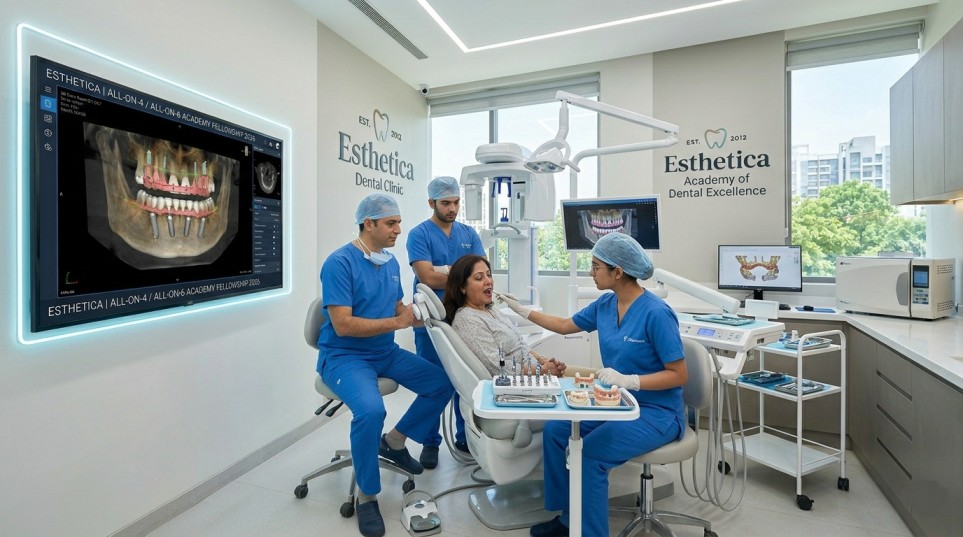
Ready to elevate your clinical expertise and master advanced full-arch implant rehabilitation? Esthetica Dental Academy offers All-on-6 Implant Training in India for Canadian Dentists, with practical clinical learning, expert mentorship, treatment planning, and live surgery exposure.
Take the Next Step in Your Dental Career!
Enquire Today to Explore Your Training Options in India!
2-Day
Implantology
An intensive introduction for dentists who want to understand the complete implant workflow.
- ✓2 Days intensive training
- ✓Basic implantology concepts
- ✓Surgical kit demonstration
- ✓Hands-on training
- ✓Live implant surgery exposure
- ✓Certificate
Basic to Advanced
Comprehensive clinical training covering implant placement, bone grafting, sinus lift and prosthetic workflows.
- ✓5–7 Days training
- ✓Live patient surgeries
- ✓Implant placement
- ✓Bone grafting
- ✓Sinus lift
- ✓CBCT planning
- ✓Prosthetic workflow
Implant Diploma
Advanced structured training for dentists seeking deeper implant surgery and prosthetic exposure.
- ✓7 Days intensive program
- ✓15 implant procedures
- ✓Advanced surgery
- ✓Bone management
- ✓Sinus lift
- ✓Prosthetic rehabilitation
- ✓Extended mentorship
Customize Your
Course
Need a program designed around your specific clinical requirements? Build a customized implantology training plan with our team.
- ✓Choose your training duration
- ✓Select specific clinical procedures
- ✓Personalized learning objectives
- ✓Hands-on clinical exposure
- ✓Advanced implantology topics
- ✓Individual mentorship options