








Zygomatic Implant Training in India for Foreign Dentists
Why Every International Dentist Is Talking About Zygomatic Implants
If you’re a dentist practicing abroad and you keep hearing the words “zygomatic implants” in every advanced dentistry forum, you’re not imagining it. Severe bone loss cases used to mean turning patients away or referring them out. Today, zygomatic implant training in India for foreign dentists is changing that story completely. Clinicians from Canada, the USA, the UK, and the Middle East are flying in specifically to master this technique, because it opens up an entirely new category of patients—the ones with atrophic jaws who were previously told, “There’s nothing we can do.”
This isn’t a niche skill anymore. It’s becoming a core competency for anyone who wants to handle full-mouth rehabilitation with confidence.
What Makes Zygomatic Implant Training in India So Popular Right Now
There’s a simple reason international dentists are choosing India for this kind of specialized learning: volume. Indian training centers see a much higher number of complex bone-loss cases than smaller practices overseas, which means hands-on exposure comes faster and more consistently. Add to that world-class faculty, modern surgical facilities, and training costs that are a fraction of what similar programs charge in North America or Europe, and the appeal becomes obvious.
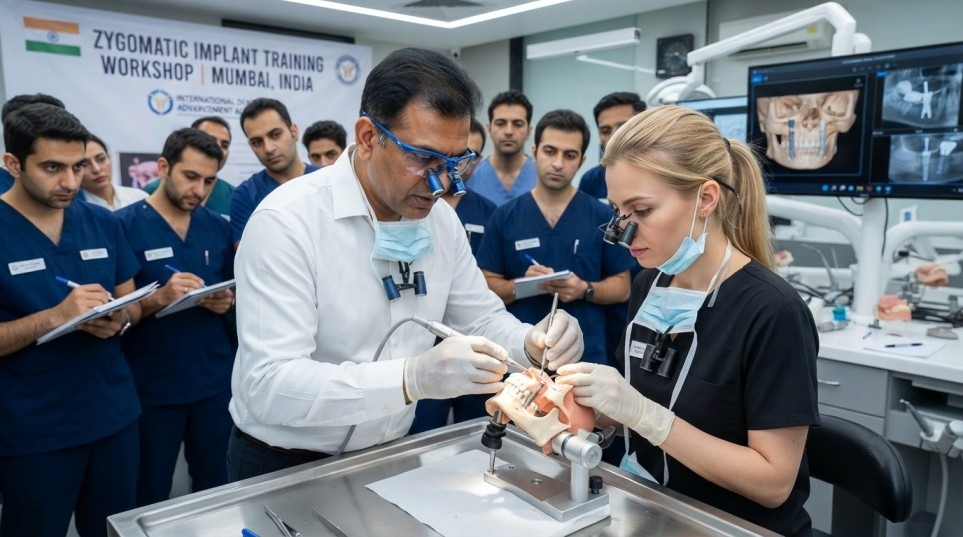
For a foreign-trained dentist, this translates into real, measurable value—you’re not sitting through slideshows about theory you already know. You’re scrubbing in, observing live surgeries, and eventually performing procedures under expert supervision.
Zygomatic Implant Course for Foreign Dentists: What You Actually Learn
A well-structured zygomatic implant course for foreign dentists doesn’t just throw you into surgery on day one. It builds you up systematically:
- Case selection and diagnosis—learning to identify which patients are genuinely zygomatic candidates versus those who could be treated with standard implants or bone grafting
- CBCT-based treatment planning—reading advanced imaging to map the zygomatic bone and avoid critical anatomical structures
- Surgical protocol mastery—understanding trajectory, angulation, and anchorage specific to the zygomatic bone rather than the maxilla
- Prosthetic workflow—because a successful zygomatic case isn’t just about placing the implant, it’s about delivering a functional, aesthetic final restoration
- Complication management—recognizing and handling the specific risks that come with this more advanced technique
This progression matters. Surgeons who understand the “why” behind every step end up with far better long-term outcomes than those who only memorize a sequence of surgical motions.
Zygomatic Implant Training for International Dentists: Who Should Enroll
You don’t need to already be a full-mouth rehabilitation expert to start this journey, but a solid foundation helps. Zygomatic implant training for international dentists is generally best suited for:
- Dentists who already have basic to intermediate implantology experience
- Prosthodontists and oral surgeons expanding into full-arch and complex bone-loss cases
- Clinic owners who want to stop referring out atrophic jaw patients and instead treat them in-house
- Dentists preparing to relocate or expand services and looking to add a high-value, high-income procedure to their skill set
If you’ve placed standard implants before and you’re ready for the next level of complexity, this is exactly where you should be looking next.
Zygomatic Implantology Course in India: What Sets a Good Program Apart
Not every “zygomatic implantology course in India” is built the same way, and this is where foreign dentists need to be genuinely selective. A strong program should offer:
Live patient surgeries, not just simulations. Watching a video or working on a model can only take you so far. Real learning happens when you observe or assist on actual atrophic jaw cases under the guidance of an experienced mentor.
Mentorship from clinicians who operate regularly. There’s a big difference between a lecturer who teaches the theory and a surgeon who performs zygomatic placements every week. You want the latter.
Structured, hands-on progression. The best programs move you from observation to assisted procedures to independent execution — not all at once, but as your confidence and competence grow.
Support beyond the classroom. Good training doesn’t end when the course does. Look for programs that offer ongoing mentorship, case discussion groups, or referral support once you’re back in your home practice.
Why Canadian Dentists Are Increasingly Choosing India for This Training
Canada has a growing population of patients with severe bone loss—often linked to long-term denture wear, periodontal disease, or age-related bone resorption. Many Canadian dentists find that local advanced implant training programs are either limited in availability, extremely expensive, or don’t provide enough live surgical exposure due to smaller patient pools.
Training in India solves each of these problems at once. Canadian dentists get compressed, intensive programs that would otherwise take months to complete locally, at a cost that makes sense even after factoring in travel. Just as importantly, the sheer number of complex cases available in Indian training academies means Canadian dentists leave with real surgical hours logged, not just certificates.
For dentists eyeing NDBE-related clinical readiness or simply wanting to bring a genuinely differentiated, high-income skill back to their Canadian practice, this route has become one of the more practical options available today.
The Career and Income Impact of Learning Zygomatic Implants
Let’s be direct about this: zygomatic implants are one of the higher-income procedures in modern implant dentistry, precisely because so few dentists are trained to perform them. Patients with severe bone atrophy are often willing to travel and pay a premium for a dentist who can offer a fixed, same-day solution instead of years of grafting and staged surgeries.
For a foreign dentist, adding this skill doesn’t just mean treating more patients—it means becoming the referral point in your region for a procedure most colleagues simply can’t offer. That kind of positioning compounds over the years, both in reputation and in revenue.
Getting Started: What Foreign Dentists Should Look for Before Enrolling
Before committing to any program, it’s worth checking a few things:
- Does the training include actual live surgeries, or only observation?
- What is the ratio of hands-on time to lecture time?
- Who are the mentors, and how much active surgical experience do they have?
- Is there a structured pathway from basic to advanced implant training, or does the course jump straight into complex cases?
- What support exists after you return home—case reviews, mentorship calls, or a referral network?
Asking these questions upfront saves you from programs that look impressive on paper but don’t actually build real surgical competence.
Final Thoughts
Zygomatic implant training in India for foreign dentists isn’t just a trend—it’s a practical response to a real gap in advanced surgical education worldwide. With access to high case volumes, experienced mentors, live surgical exposure, and costs that make sense for international travelers, India has positioned itself as one of the most efficient places to build this specialized skill set. Whether you’re a Canadian dentist looking to bring a rare, high-demand procedure home or a clinician anywhere in the world ready to stop referring out your toughest bone-loss cases, structured hands-on training is the difference between reading about zygomatic implants and confidently performing them.
At Esthetica Advanced Dental Academy, this entire progression—from foundational case understanding to live surgical exposure—is built specifically for dentists who are serious about mastering full-arch and zygomatic implantology at an international standard.
A Message from Dr. Sharad Arya, Founder – Esthetica Dental Academy
When I started Esthetica Dental Clinic in 2012, my vision was simple — to combine clinical excellence with genuine patient care. Over the years, as our practice grew across Punjab, Himachal, and Chandigarh, I realized that the biggest gap in Indian dentistry wasn’t a lack of talent, but a lack of accessible, hands-on implant training for practicing dentists.
That’s why we built Esthetica Dental Academy — not as another certificate mill, but as a mentorship-driven program where dentists actually work on live cases, under supervision, until they’re confident enough to do it on their own. I’ve seen BDS graduates walk in unsure of their surgical skills and walk out ready to plan and execute full-arch implant cases independently.
If you’re serious about growing your implant practice, I’d encourage you to invest in training that prioritizes real clinical exposure over theory alone. That’s the philosophy behind everything we teach here.
— Prof. Dr. Sharad Arya, MDS
Every batch we train is small by design, because implant surgery demands individual attention, not a classroom of fifty watching a screen. Whether it’s digital implant planning, guided surgery, or full-arch rehabilitation, we make sure every participant leaves confident enough to apply it in their own practice.
Frequently Asked Questions
1. What is zygomatic implant training and why is it different from regular implant training?
Zygomatic implant training focuses on placing implants into the zygomatic (cheekbone) rather than the jawbone, specifically for patients with severe bone loss who aren’t candidates for standard implants or grafting procedures.
2. Is zygomatic implant training in India suitable for dentists with limited implant experience?
It’s best suited for dentists with at least basic to intermediate implant experience, since the technique builds on core implantology knowledge before adding the complexity of zygomatic anatomy and surgical protocol.
3. How long does a zygomatic implant course for foreign dentists typically take?
Program lengths vary depending on the depth of training, ranging from short, intensive live-surgery observation programs to longer hands-on fellowships with multiple supervised procedures.
4. Why are Canadian dentists specifically choosing India for zygomatic implant training?
Canadian dentists often face limited local access to high case volumes and live surgical exposure for this niche technique, making India’s combination of experienced mentors, frequent cases, and lower costs an efficient alternative.
5. Will this training help with international licensing exams like the NDBE in Canada?
While the training itself isn’t an exam prep course, the clinical exposure, treatment planning skills, and hands-on confidence gained can meaningfully support the practical and clinical judgment components of exams like the NDBE.
6. Can I start performing zygomatic implants immediately after completing the course?
Your readiness depends on the program level completed and your prior surgical background; most structured programs are designed to build confidence progressively rather than promise instant independent practice after a single course.
7. What should I check before choosing a zygomatic implantology course in India?
Confirm whether the program includes live patient surgeries, verify the mentor’s active surgical experience, and ask about post-training support such as case reviews or mentorship access once you return to your home country.
Ready to Add Zygomatic Implantology to Your Skill Set?
If you’re a foreign dentist ready to move beyond theory and start building real, hands-on surgical confidence in zygomatic and full-arch implantology, now is the time to take the next step. Reach out today to learn more about program dates, live surgical exposure, and mentorship availability.