





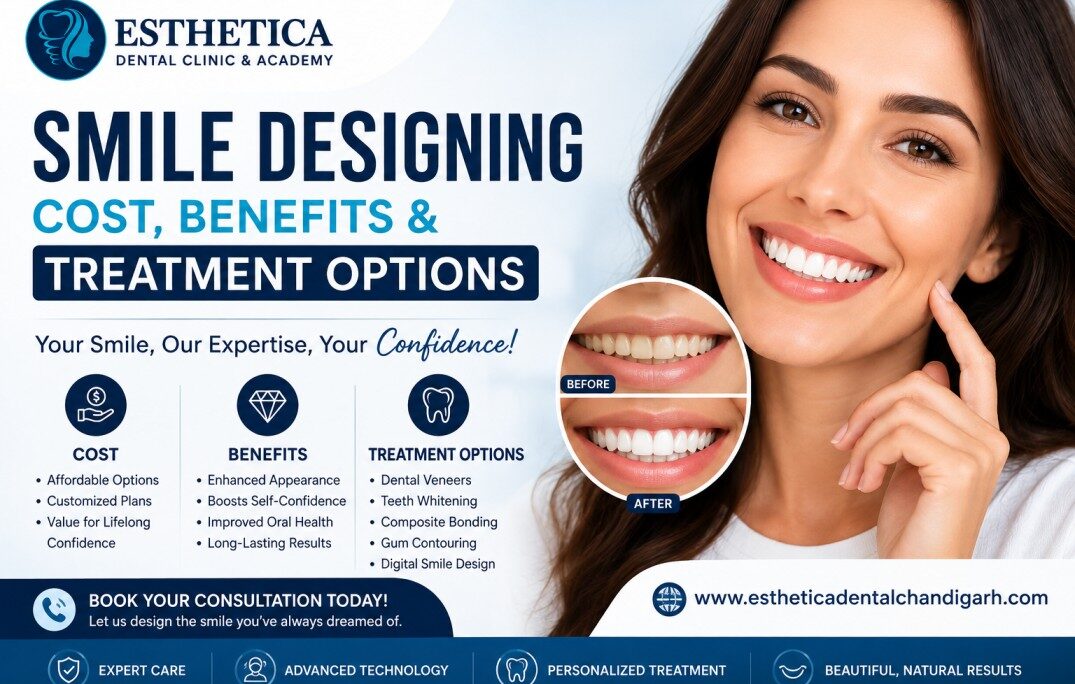
Smile Designing Cost Benefits and Treatment Options
A beautiful smile can influence confidence, communication, photographs, and professional interactions. For patients exploring cosmetic dentistry, Smile Designing Cost depends on several factors, including the number of teeth involved, treatment type, materials, digital planning, and the complexity of the case. Modern smile design focuses on creating a natural result that complements your facial features rather than simply making teeth look whiter or perfectly uniform.
What Is Smile Designing?
Smile designing is a personalized cosmetic dentistry approach that improves the appearance, balance, and harmony of your smile. Instead of treating every patient with the same procedure, a dentist evaluates the teeth, gums, lips, facial proportions, tooth colour, tooth shape, and overall smile line.
The objective is to create a smile that looks attractive while remaining natural and comfortable. Depending on your dental needs, your treatment plan may include teeth whitening, composite bonding, veneers, dental crowns, gum contouring, orthodontic treatment, or a combination of procedures.
A detailed consultation is important because cosmetic dentistry should begin with healthy teeth and gums. Existing cavities, gum disease, damaged teeth, or bite problems may need to be addressed before cosmetic treatment begins.
Factors That Affect Smile Designing Cost
The investment required for smile enhancement is not the same for every patient. A dentist normally considers several clinical and cosmetic factors before providing a personalized estimate.
Number of Teeth Being Treated
One of the biggest factors is the number of teeth included in the treatment. A patient who wants to improve one or two visible teeth may require a smaller treatment plan than someone looking for a complete smile transformation.
Some patients only need corrections to their upper front teeth, while others may benefit from treatment involving both upper and lower teeth. The more teeth involved, the greater the laboratory, material, clinical, and planning requirements can become.
Type of Cosmetic Treatment
Smile designing is not a single dental procedure. The final treatment may involve one or several cosmetic options.
Professional teeth whitening can help improve tooth colour. Composite bonding may correct small chips, spaces, or irregular edges. Porcelain veneers can change the shape, size, colour, and appearance of selected teeth. Crowns may be recommended when a tooth also requires structural protection.
If tooth alignment is the main concern, clear aligners or braces may be considered before cosmetic procedures. Your dentist can determine which combination is appropriate after examining your teeth and bite.
Choice of Dental Materials
Material selection can influence both appearance and long-term performance. Dental ceramics such as lithium disilicate and other high-quality restorative materials can provide excellent translucency and natural-looking results.
The right material depends on factors such as tooth position, bite pressure, desired appearance, available enamel, and the type of restoration being planned. Choosing a material simply because it is the most expensive option does not necessarily mean it is the best option for every patient.
Digital Planning and Smile Analysis
Modern cosmetic dentistry increasingly uses digital photography, intraoral scanning, facial analysis, and computer-assisted planning. Digital Smile Design can help patients and dentists visualize proposed changes before treatment begins.
A digital workflow can improve communication because patients can discuss tooth proportions, shape, shade, and overall appearance with their dentist before the final restorations are produced. However, digital technology is a planning aid rather than a guarantee of an identical final result. Clinical judgment remains essential when translating a digital design into the mouth.
Dentist’s Experience and Clinical Expertise
Cosmetic dentistry combines clinical knowledge with an understanding of facial aesthetics. Experience matters because a successful smile makeover requires more than creating bright or straight teeth.
A skilled cosmetic dentist considers facial symmetry, tooth proportions, gum display, smile arc, lip movement, bite, and the patient’s expectations. Treatment planning should also prioritize healthy tooth structure and appropriate restorative techniques.
Laboratory and Customization Requirements
Highly customized veneers, crowns, and other restorations require careful communication between the dentist and dental laboratory. Shade selection, tooth shape, translucency, surface texture, and fit all contribute to the final appearance.
Complex cases may require additional digital records, temporary restorations, mock-ups, or multiple stages of refinement. These factors can affect the overall treatment investment.
Popular Smile Design Treatment Options
The best treatment depends on the patient’s concerns, oral health, budget, and desired outcome. Common options include the following.
Professional Teeth Whitening
Whitening is suitable for patients whose primary concern is tooth discoloration or staining. Professional whitening can brighten natural teeth and may be included as part of a larger cosmetic treatment plan.
It is important to remember that whitening changes the colour of natural teeth but does not whiten existing veneers, crowns, or fillings. Dentists may therefore recommend whitening before selecting the final shade of restorations.
Composite Bonding
Composite bonding is a minimally invasive option for correcting small chips, minor gaps, uneven edges, and certain shape concerns. Tooth-coloured resin is carefully applied and shaped to improve the appearance of the tooth.
It can be a useful option when only minor cosmetic changes are required. The longevity of bonding depends on factors such as oral hygiene, bite forces, eating habits, and the location of the restoration.
Porcelain Veneers
Veneers are thin custom-made restorations designed to improve the appearance of the visible surface of selected teeth. They may help address discoloration, worn edges, irregular shapes, gaps, or certain cosmetic imperfections.
Not every patient is a suitable candidate for veneers. A dental examination is necessary to evaluate enamel, gum health, bite, tooth position, and existing restorations before treatment.
Dental Crowns
Crowns can improve the appearance of a damaged or heavily restored tooth while also providing structural support. They may be considered when a tooth needs more protection than a veneer or bonding procedure can provide.
A crown should not be selected solely for cosmetic reasons when a more conservative treatment could achieve an appropriate result. Preserving healthy tooth structure should remain an important consideration.
Clear Aligners and Orthodontic Treatment
Crowding, spacing, and certain bite concerns may be better addressed through orthodontic treatment. Clear aligners are increasingly popular among adults who want a discreet approach to improving tooth alignment.
In some cases, alignment is completed before veneers or other cosmetic restorations. This can create a healthier foundation for the final aesthetic result.
Gum Contouring
The appearance of the gums can have a major influence on smile balance. When excessive gum display or an uneven gum line affects the appearance of the smile, gum contouring may be considered for suitable patients.
The procedure must be carefully planned to protect periodontal health and create appropriate proportions between the teeth and gums.
How Does a Smile Makeover Treatment Work?
A Smile Makeover Treatment usually begins with a consultation and comprehensive assessment. Your dentist will discuss what you like and dislike about your smile and identify the changes that are realistically achievable.
The next stage may include clinical photographs, digital scans, dental X-rays, facial measurements, and bite evaluation. With digital planning, the dentist can assess how proposed changes may interact with your facial features and smile dynamics.
A mock-up or temporary preview may sometimes be used to help patients understand the proposed appearance. Once the treatment plan is approved, the selected procedures are completed according to the clinical requirements of the case.
The final stage includes checking the fit, appearance, bite, comfort, and overall harmony of the restorations. Follow-up appointments may be required for adjustments and maintenance guidance.
How to Choose the Right Smile Design Option
Choosing cosmetic treatment should not be based on price alone. Start by identifying the specific concern you want to improve. Is it tooth colour, shape, spacing, alignment, worn teeth, chipped teeth, or an uneven gum line?
Next, discuss conservative alternatives with your dentist. A suitable treatment should improve your smile while preserving as much healthy tooth structure as possible.
Patients should also ask about the expected lifespan of the treatment, maintenance requirements, possible risks, treatment timeline, material options, and what happens if a restoration needs repair or replacement.
For Canadian patients researching cosmetic dentistry abroad, it is particularly important to understand the complete treatment plan, follow-up arrangements, travel requirements, warranty or maintenance policies, and the credentials of the treating dental team before making a decision.
What Results Can You Expect?
The goal of contemporary cosmetic dentistry is not necessarily an artificial, extremely white smile. Current aesthetic approaches increasingly emphasize natural proportions, individualized tooth shapes, minimally invasive treatment, and harmony with facial features.
Your result will depend on your starting dental condition, selected procedures, biological factors, oral hygiene, bite, and adherence to aftercare instructions. A consultation is therefore more reliable than comparing photographs or expecting an identical result to another patient.
Frequently Asked Questions
1. How much does smile designing usually cost?
The final investment varies according to the number of teeth treated, procedures selected, materials, laboratory requirements, digital planning, and case complexity. A personalized dental consultation is necessary to determine an accurate estimate.
2. Is Digital Smile Design worth it?
Digital planning can improve communication between the dentist and patient by allowing proposed smile changes to be visualized before treatment. It can be particularly useful for complex cosmetic cases where tooth proportions and facial harmony are important.
3. How long does a smile makeover take?
Treatment time depends on the procedures involved. Simple whitening or bonding may require fewer appointments, while veneers, orthodontic alignment, crowns, or combined treatments can take considerably longer.
4. Are veneers permanent?
Veneers are considered long-term restorations, but they are not permanent. Their lifespan depends on material, oral hygiene, bite forces, lifestyle habits, and professional maintenance. They may eventually require repair or replacement.
5. Is smile designing painful?
Many cosmetic procedures are minimally invasive and can be performed comfortably. If tooth preparation or another procedure is required, local anesthesia may be used when appropriate. Your dentist can explain what you can expect before treatment.
6. Can I get a smile makeover if my teeth are crooked?
Yes, but the recommended approach depends on the severity of the alignment problem. Clear aligners or braces may be recommended before cosmetic restorations, while minor irregularities may sometimes be managed through restorative techniques.
7. How do I maintain my new smile?
Maintain regular brushing and flossing, attend dental check-ups, avoid using your teeth to open packages, and follow your dentist’s recommendations. Patients who grind their teeth may also benefit from a professionally recommended night guard.
Conclusion
A successful smile transformation is about more than achieving whiter or straighter teeth. The right plan considers oral health, facial proportions, tooth shape, gum aesthetics, function, durability, and your personal expectations. Understanding the factors that influence Smile Designing Cost can help you compare treatment options realistically and make a more informed decision.
For patients considering cosmetic dentistry in Mohali or travelling from Canada for treatment, Esthetica dental Clinic can provide a personalized assessment to determine which smile design approach is appropriate for your dental needs and aesthetic goals.