







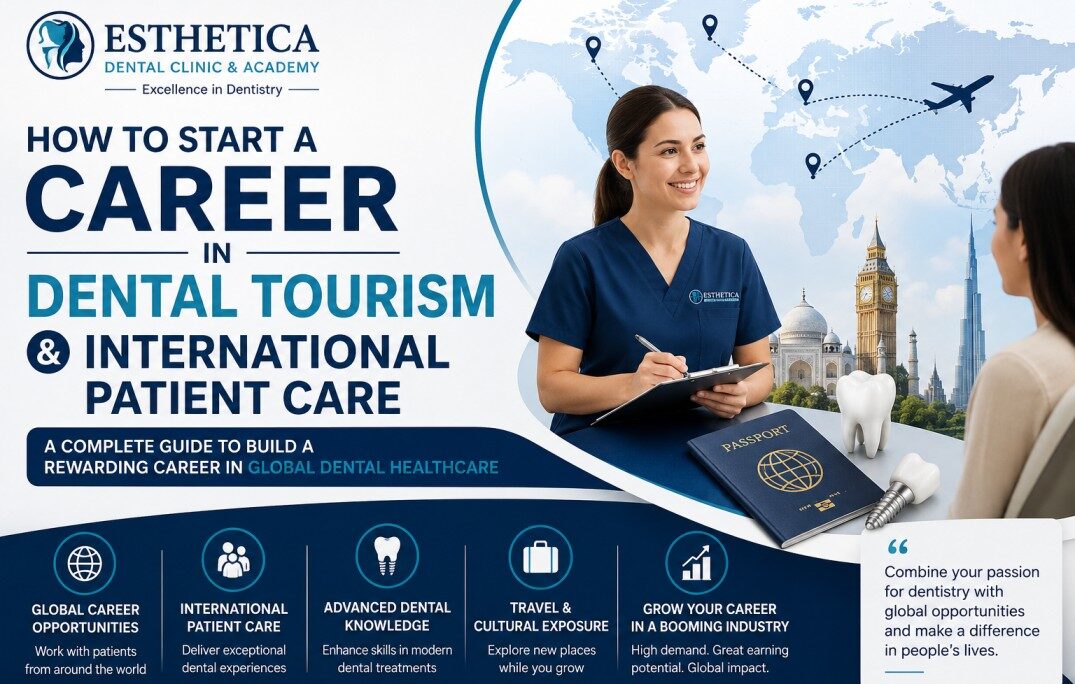
How to Start a Career in Dental Tourism and International Patient Care
Starting a dental tourism career can offer a new professional direction for dentists who want to combine clinical expertise with international patient care. Dental tourism is not simply about treating people who travel from another country. It involves understanding patient expectations, coordinating treatment, communicating clearly, managing documentation, planning appointments, and supporting patients throughout their journey. These skills can help dentists create a more organized and patient-focused approach to global dental care.
Understand What International Patient Care Really Means
International patient care starts before the patient arrives at the clinic. An enquiry can come through a website, email, social media, telephone call, or video consultation. At this point, patients may ask about treatment options, expected duration, approximate costs, travel timing, recovery, and follow-up.
Start With a Strong Online Consultation
A virtual consultation should be structured rather than informal. Dentists can request relevant medical and dental history, photographs, previous reports, radiographs, and other records. The objective is to understand the patient’s concerns and determine whether an in-person examination is needed before making a final treatment decision.
Learn to Manage Different Patient Expectations
International dental patients can come from different backgrounds, communication styles, and expectations. Some may want detailed explanations, while others may prefer concise information. Some may focus on treatment time, while others may prioritize comfort, technology, or long-term maintenance.
Developing empathy and active listening skills can help dentists understand these differences. Simple language, written treatment information, transparent communication, and respectful interaction can reduce misunderstandings and improve patient experience.
Develop the Clinical Skills Needed for Global Patients
A successful dental tourism practice depends on strong clinical dentistry. International patients may seek dental implants, crowns, bridges, veneers, cosmetic procedures, endodontic treatment, periodontal care, or full-mouth rehabilitation. Dentists should have appropriate clinical competence for the procedures they provide and understand when a case requires specialist or multidisciplinary involvement.
Strengthen Diagnosis and Treatment Planning
International cases often require careful planning because patients may have limited time in the destination country. Before an appointment is confirmed, dentists should review available records and determine the likely treatment sequence. The final plan, however, should be based on proper clinical examination and appropriate diagnostics.
For complex cases, photographs, radiographs, scans, impressions, and medical history can support comprehensive assessment. Dentists should consider laboratory requirements, healing periods, temporary restorations, follow-up visits, and possible changes to the treatment plan. Good planning can make the patient journey more predictable without creating false certainty.
Build Strong International Patient Management Skills
Dentists entering this field need administrative and communication skills alongside clinical knowledge. International patient management can involve enquiry handling, record collection, consultation scheduling, treatment estimates, consent documentation, appointment coordination, laboratory communication, discharge instructions, and remote follow-up.
Create a Step-by-Step Patient Workflow
A clear workflow can begin with an online enquiry and continue through preliminary assessment, virtual consultation, treatment proposal, appointment scheduling, arrival, clinical treatment, discharge, and follow-up. Each step should have clear responsibilities so patients know what to expect.
Invest in Dental Tourism Training
Formal dental tourism training can help dentists understand the non-clinical skills required to manage overseas patients. A suitable program may cover consultation, case screening, treatment planning, communication, documentation, ethical marketing, patient experience, scheduling, and follow-up.
Choose a Practical Dental Tourism Course
When choosing a dental tourism course, dentists should review the curriculum carefully. The course should connect theory with practical situations. Case discussions, consultation examples, workflow exercises, documentation guidance, and patient communication scenarios can make training more useful.
Develop an Ethical Dental Tourism Business
Building a dental tourism business requires more than simply advertising internationally. Dentists need a professional digital presence that provides useful information and makes it easy for prospective patients to ask questions.
What Is the Future of Dental Tourism in India?
The future of dental tourism in India is likely to involve stronger digital communication, online consultations, advanced diagnostics, personalized treatment planning, and greater demand for transparent information. Patients can research treatment options and clinics before traveling, making the online experience an important part of the patient journey.
Dentists who combine clinical quality with communication, technology, ethical marketing, and organized patient management can adapt effectively to changing expectations. The objective is not simply to attract more overseas patients but to build a reliable system that provides appropriate care and a positive experience.
Top 7 FAQs About Dental Tourism Careers
1. What qualifications are needed to start a dental tourism career?
Dentists need appropriate qualifications and clinical competence, along with knowledge of international patient management, communication, documentation, and ethical practice.
2. Is dental tourism a good career option for dentists?
Yes. It can provide a specialized professional direction for dentists interested in international patients and global dental care.
3. What does dental tourism training include?
Training may cover international patient communication, consultation, case screening, treatment planning, documentation, scheduling, patient experience, and ethical marketing.
4. Can Indian dentists treat patients from Canada?
Indian dentists can treat international patients when they meet applicable professional, clinical, consent, documentation, and regulatory requirements.
5. Which treatments are common in dental tourism?
Common procedures can include implants, crowns, bridges, veneers, cosmetic dentistry, restorative treatment, and full-mouth rehabilitation.
6. How can dentists attract international dental patients?
A professional website, useful educational content, responsive communication, ethical digital marketing, and transparent treatment information can support international patient outreach.
7. Is practical training important for international patient care?
Yes. Practical learning can help dentists apply communication, workflow, consultation, and patient-management concepts in real situations.
Start Building Your Future in International Dental Care
A career in dental tourism combines dentistry with communication, organization, technology, and patient experience. Dentists who want to enter this field should start with strong clinical foundations and develop additional skills required to work confidently with international patients.
Take the Next Step With Focused Learning
Esthetica Dental Tourism Academy provides a learning direction for dentists who want to understand international patient workflows and develop relevant skills related to dental tourism. Focused learning can help professionals explore consultation, treatment coordination, communication, documentation, patient experience, and ethical practice.
Esthetica Dental Tourism Academy
International patient care requires consistency at every stage, from the first online enquiry to post-treatment communication. Esthetica Dental Tourism Academy focuses on broader skills that support this journey and can help dentists understand how clinical services, patient management, and international expectations are connected.
Conclusion: Turn Dental Expertise Into Global Opportunity
Starting a career in dental tourism requires patience, professional development, and commitment to patient-centered care. Dentists should enhance clinical abilities, learn international patient management, understand treatment coordination, communicate transparently, and build ethical digital visibility.
The opportunity is not only about treating patients from another country. It is about creating a dependable healthcare experience for people who trust a dental professional while traveling away from home. With the right preparation, structured workflows, and continuous learning, dentists can develop a sustainable direction in global dental care. Esthetica Dental Tourism Academy can help professionals build relevant knowledge and confidence.