








Dental Implants: Types, Benefits, Cost & Procedure
Missing teeth can affect more than your smile. They may make chewing difficult, influence speech, and gradually affect the way the remaining teeth function. Dental implants are one of the modern options available for replacing missing teeth and restoring oral function.
Unlike removable dentures, dental implants are designed to replace the tooth root as well as the visible tooth. They can provide a stable foundation for a crown, bridge, or denture. However, the suitability of implants depends on factors such as oral health, bone availability, medical history, and individual treatment needs.
This guide explains the types of dental implants, benefits, dental implant procedure, cost, recovery, and aftercare to help patients understand what to expect.
What Are Dental Implants?
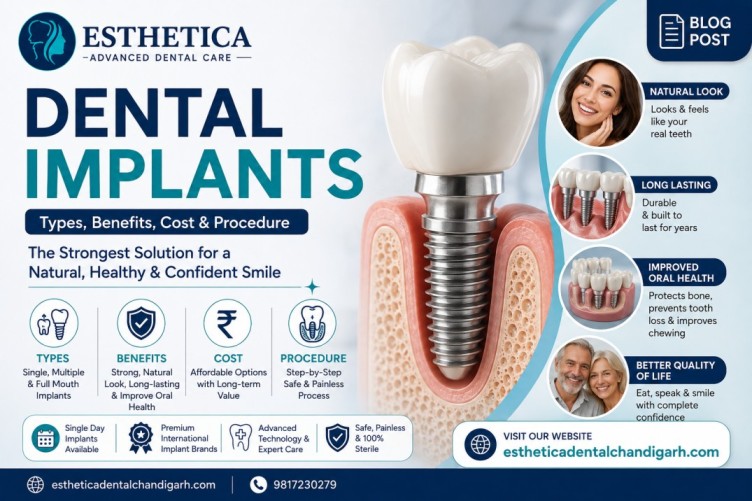
Dental implants are small, biocompatible posts, commonly made from titanium or other suitable materials, that are placed into the jawbone to support a replacement tooth.
A typical implant restoration has three main components:
- Implant: The portion placed into the jawbone.
- Abutment: The connector between the implant and replacement tooth.
- Crown: The visible tooth-shaped restoration attached to the implant.
After placement, the implant may undergo a process called osseointegration, during which the surrounding bone develops a stable relationship with the implant surface. Once healing and clinical assessment indicate that the implant is ready, the final restoration can be placed.
Types of Dental Implants
The appropriate implant treatment varies depending on how many teeth are missing and the condition of the supporting tissues.
Single Tooth Dental Implants
A single dental implant can replace one missing tooth without requiring the adjacent teeth to be prepared for support. An implant-supported crown is generally used to restore the missing tooth.
This approach can be considered when a patient has adequate bone and healthy surrounding tissues.
Implant-Supported Bridges
When several adjacent teeth are missing, an implant-supported bridge may be considered. Implants provide support for the bridge, reducing reliance on natural teeth for retention.
The number and position of implants depend on the patient’s anatomy and the planned restoration.
Implant-Supported Dentures
Patients who have lost most or all of their teeth may be candidates for implant-supported dentures. Implants can improve the stability of a denture compared with a conventional removable denture in appropriately selected cases.
Full-Arch Implant Solutions
For patients with extensive tooth loss, full-arch implant treatment can provide support for a complete set of replacement teeth. Treatment planning may involve multiple implants strategically positioned to support the final prosthesis.
Benefits of Dental Implants
Dental implants offer several potential benefits when properly planned and maintained.
Improved Chewing Function
A stable implant-supported restoration can help patients eat more comfortably than they might with missing teeth or an unstable removable appliance.
Natural-Looking Appearance
Implant restorations are designed to resemble natural teeth in shape, size, and appearance. The final result depends on factors such as tooth position, restoration design, gum condition, and the patient’s individual characteristics.
Support for Oral Function
Replacing missing teeth can help restore functional balance within the mouth. Proper treatment planning also considers the bite and relationship between the upper and lower teeth.
Bone Preservation
When a tooth is lost, the surrounding jawbone may gradually decrease in volume. An implant placed in suitable conditions can provide functional stimulation to the surrounding bone and may help reduce some of the changes associated with tooth loss.
No Need to Remove the Restoration Daily
Unlike traditional removable dentures, many implant-supported restorations are fixed in place. The exact design depends on the treatment selected.
Who May Need Dental Implants?
Dental implants may be considered for adults who have:
- One or more missing teeth
- Difficulty using conventional dentures
- Sufficient bone to support an implant
- Healthy or appropriately managed gums
- A commitment to maintaining good oral hygiene
- Realistic expectations about treatment outcomes
Some patients with inadequate bone volume may require additional procedures before implant placement. Smoking, uncontrolled medical conditions, active gum disease, and poor oral hygiene may also affect treatment planning and healing.
A dental examination and appropriate diagnostic assessment are therefore important before deciding whether implants are suitable.
Dental Implant Procedure: What to Expect
The dental implant procedure usually involves several stages rather than a single appointment.
1. Consultation and Assessment
The dentist evaluates the teeth, gums, bite, bone condition, and overall oral health. Digital imaging may be used to assess anatomy and assist with treatment planning.
The dentist may also discuss treatment alternatives, expected outcomes, possible risks, and maintenance requirements.
2. Treatment Planning
A personalized treatment plan is prepared based on the number of missing teeth, bone condition, restoration requirements, and other clinical factors.
In some cases, tooth extraction, gum treatment, or bone augmentation may be required before implant placement.
3. Implant Placement
The implant is surgically positioned within the jawbone. The procedure is performed using appropriate anesthesia and clinical protocols.
After placement, the area needs time to heal.
4. Healing and Osseointegration
During healing, the implant develops a stable relationship with the surrounding bone. The duration varies between patients and depends on factors including implant location, bone quality, healing response, and the specific treatment plan.
5. Abutment and Final Restoration
Once the implant is considered ready for restoration, an abutment may be connected and the final crown, bridge, or denture can be fabricated and fitted.
The dentist checks the fit, bite, appearance, and function before completing the restoration.
Dental Implant Recovery and Aftercare
Recovery varies depending on the complexity of treatment and individual healing. Some temporary swelling, tenderness, or discomfort may occur after implant surgery.
Patients should follow their dentist’s postoperative instructions carefully. These may include maintaining oral hygiene around the treatment area, following dietary recommendations, avoiding habits that interfere with healing, and attending scheduled follow-up appointments.
Long-term dental implant aftercare is equally important. Although an implant itself cannot develop tooth decay like a natural tooth, the surrounding gums and tissues can still develop problems if oral hygiene is inadequate.
Regular brushing, interdental cleaning, professional dental visits, and monitoring can help maintain the health of the implant and surrounding tissues.
Dental Implant Cost
The dental implant cost varies considerably from patient to patient. Factors that can influence the overall price include:
- Number of implants required
- Type of implant and restoration
- Diagnostic imaging and planning
- Bone grafting or other additional procedures
- Crown, bridge, or denture design
- Complexity of the case
- Follow-up and maintenance requirements
Because treatment requirements differ, patients should obtain a personalized treatment estimate after a clinical examination rather than relying only on a general online price.
At Esthetica Dental, patients can discuss their individual requirements, treatment alternatives, and expected stages of care with the dental team before proceeding.
Are Dental Implants Permanent?
Dental implants are designed as a long-term tooth replacement option, but no treatment can be guaranteed to last forever. Their longevity depends on factors such as oral hygiene, gum health, bite forces, lifestyle habits, implant position, restoration quality, and regular professional care.
Good maintenance and regular dental reviews are important for protecting both the implant and the surrounding tissues.
Frequently Asked Questions
1. Are dental implants painful?
Implant placement is performed using appropriate anesthesia, so significant pain during the procedure is generally controlled. Some discomfort, swelling, or tenderness may occur afterward. Your dentist will provide specific postoperative instructions based on your treatment.
2. How long does a dental implant take?
Treatment time varies. Some cases can be completed relatively quickly, while others require several months because of healing, bone grafting, or additional procedures. Your dentist can provide a more accurate timeline after assessment.
3. Are dental implants better than dentures?
Dental implants and dentures serve different needs. Implants can provide fixed or more stable support, while dentures may be suitable for patients seeking a removable solution. The right choice depends on oral health, bone condition, preferences, and budget.
4. Can dental implants replace multiple missing teeth?
Yes. Depending on the clinical situation, multiple missing teeth may be replaced using individual implants, implant-supported bridges, implant-supported dentures, or full-arch implant solutions.
5. How should I care for dental implants?
Maintain daily oral hygiene, clean around the implant restoration, follow your dentist’s recommendations, and attend regular dental check-ups. Professional monitoring is particularly important for detecting gum or implant-related problems early.
6. How much do dental implants cost?
There is no single fixed price because treatment varies according to the number of implants, restoration type, bone condition, and additional procedures required. A personalized consultation is the best way to determine the expected cost for your case.
Final Thoughts
Dental implants can be an effective option for replacing missing teeth when appropriate clinical conditions are present. From single-tooth replacement to full-arch rehabilitation, different implant approaches can be planned according to individual needs.
Understanding the types, benefits, procedure, recovery, cost, and aftercare can help patients make better-informed decisions. A detailed dental examination is essential before treatment because every patient’s oral condition and requirements are different.
If you are considering dental implants, Esthetica Dental can help you understand the available treatment options and develop an approach based on your individual dental needs.