







Diploma in Implantology
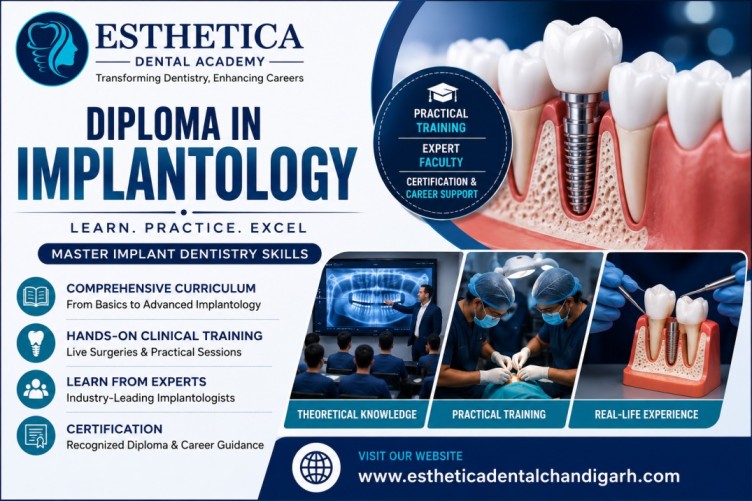
A diploma in implantology can help dentists develop the knowledge and practical skills needed to plan, place, and restore dental implants with greater confidence. At Esthetica Dental Academy, implant-focused education can provide dentists with a structured learning pathway that progresses from fundamental concepts to more advanced clinical principles. With the growing demand for implant-supported teeth, structured dental implant training can be an important step for dentists looking to expand their clinical capabilities.
Dental implantology combines diagnosis, treatment planning, surgical procedures, prosthetic rehabilitation, and long-term patient care. Therefore, dentists need more than theoretical knowledge. A well-designed implant diploma program should help learners understand each stage of implant treatment and how different clinical decisions affect treatment outcomes.
What Is a Diploma in Implantology?
A diploma in implantology is a specialized educational program designed to provide dentists with comprehensive knowledge of dental implant treatment. Depending on the program structure, training may cover implant biology, patient assessment, treatment planning, surgical principles, implant placement, prosthetic restoration, complications, and maintenance.
Unlike learning individual implant procedures through short workshops, a diploma-level program can offer a more systematic approach. Dentists can progress from basic concepts to more complex cases while developing an understanding of the complete implant treatment workflow.
At Esthetica Dental Academy, the focus can be placed on connecting theoretical concepts with practical clinical applications so that dentists understand not only how a procedure is performed but also why particular treatment decisions are made.
What Do Dentists Learn at the Basic Level?
The foundation of any successful implant treatment begins with understanding the basic principles of implantology. Early modules in a diploma in implantology typically introduce dentists to the biological, anatomical, and clinical concepts behind implant treatment.
Dental Implant Fundamentals
Dentists learn about:
- Types and components of dental implants
- Implant materials and surface characteristics
- Basic implant terminology
- Osseointegration
- Implant-supported restorations
- Indications and contraindications
- Basic principles of implant biomechanics
Understanding these fundamentals helps dentists make informed decisions when selecting suitable treatment approaches for patients.
Oral Anatomy and Implant Biology
A strong knowledge of oral anatomy is essential before performing implant surgery. Training may cover important anatomical structures, bone characteristics, soft tissues, nerves, and blood vessels.
Dentists also learn about osseointegration, the biological process through which an implant integrates with the surrounding bone. This foundation helps learners understand why factors such as bone quality, implant positioning, surgical technique, and healing conditions matter.
Patient Assessment and Treatment Planning
One of the most important parts of dental implant training is learning how to evaluate a patient before treatment.
Dentists need to assess oral health, medical history, periodontal condition, bone availability, occlusion, existing teeth, aesthetic requirements, and patient expectations.
Diagnostic Procedures
An implant diploma program may introduce dentists to diagnostic tools such as:
- Clinical examination
- Dental radiographs
- Digital imaging
- CBCT evaluation
- Diagnostic models
- Digital treatment planning
- Occlusal assessment
Proper diagnosis allows dentists to identify potential risks and develop a treatment plan that is appropriate for the patient’s individual needs.
Developing a Treatment Plan
Treatment planning involves determining implant position, number of implants, prosthetic requirements, available bone, aesthetic considerations, and surgical approach.
At Esthetica Dental Academy, dentists can benefit from understanding the relationship between surgical planning and the final prosthetic result. This is particularly important because implant placement should be planned with the final restoration in mind.
Surgical Skills Covered During Implant Training
As dentists progress through a diploma in implantology, the curriculum can move from foundational knowledge toward surgical principles.
Training may introduce learners to:
- Surgical instrumentation
- Sterilization and infection-control principles
- Flap design concepts
- Osteotomy preparation
- Implant positioning
- Primary stability
- Suturing principles
- Post-operative care
- Patient instructions
The objective is to help dentists understand the sequence and principles involved in implant surgery rather than simply memorizing individual steps.
Hands-on learning, where included, can further help dentists become familiar with instruments, surgical workflows, and clinical decision-making under appropriate supervision.
Implant Placement and Prosthetic Considerations
Successful implant treatment does not end after implant placement. Dentists must also understand how the implant will eventually support a crown, bridge, or other restoration.
A comprehensive implant diploma program therefore connects surgical and prosthetic concepts.
Dentists may learn about:
- Implant positioning for prosthetic success
- Abutments
- Implant impressions and digital workflows
- Temporary restorations
- Implant-supported crowns
- Fixed implant prostheses
- Occlusal considerations
- Aesthetic factors
Understanding prosthetic requirements before surgery can help dentists appreciate the importance of three-dimensional implant positioning.
What Is Covered in Advanced Implantology Training?
Once the basic principles are understood, dentists can progress toward more complex treatment concepts through an advanced implantology course.
Advanced topics may include complex treatment planning, compromised implant sites, bone deficiencies, soft-tissue considerations, immediate implant concepts, and digital workflows.
Bone and Soft-Tissue Considerations
Some patients may not have ideal bone volume or soft-tissue conditions for straightforward implant placement. Advanced education can introduce dentists to principles associated with:
- Bone augmentation
- Guided bone regeneration
- Sinus-related implant considerations
- Ridge preservation
- Soft-tissue management
- Management of compromised sites
The exact procedures taught depend on the curriculum, clinical facilities, and level of hands-on training offered by the academy.
Digital Dentistry and Implantology
Modern implant dentistry increasingly uses digital technologies to improve diagnosis and treatment planning.
A contemporary diploma in implantology may introduce dentists to digital workflows such as:
- CBCT-based planning
- Digital impressions
- Virtual implant planning
- Surgical guide concepts
- Digital smile and prosthetic planning
- CAD/CAM-supported restorations
Digital tools can help dentists visualize anatomy and plan implant positioning before treatment. However, technology works best when combined with sound clinical knowledge and appropriate case selection.
Managing Implant Complications
Learning how to recognize and manage complications is another important part of advanced dental implant training.
Dentists may study potential issues such as:
- Peri-implant inflammation
- Implant instability
- Infection
- Prosthetic complications
- Screw-related problems
- Poor implant positioning
- Soft-tissue concerns
- Implant failure
Training should also emphasize prevention. Careful diagnosis, treatment planning, surgical technique, prosthetic planning, and regular maintenance can all contribute to reducing potential complications.
Why Choose a Structured Implant Diploma Program?
Implantology involves multiple interconnected clinical disciplines. A structured program can help dentists learn these concepts in an organized sequence instead of studying isolated procedures.
A comprehensive program may provide benefits such as:
- Stronger theoretical foundation
- Better understanding of treatment planning
- Exposure to implant surgical principles
- Knowledge of prosthetic rehabilitation
- Understanding of digital workflows
- Greater awareness of complications
- Opportunities for practical learning, where provided
- Improved clinical decision-making
For dentists seeking systematic education, Esthetica Dental Academy can be considered as part of their search for structured implant-focused learning.
Who Can Benefit From a Diploma in Implantology?
A diploma in implantology may be suitable for dentists who want to expand their knowledge of implant dentistry and incorporate implant-related treatment into their professional practice.
It can be particularly relevant for dentists who:
- Want structured implant education
- Are beginning their journey in implant dentistry
- Want to strengthen treatment-planning skills
- Wish to understand surgical and prosthetic workflows
- Want to explore advanced implantology concepts
- Are interested in modern digital implant workflows
Before enrolling, dentists should review the curriculum, eligibility requirements, practical components, faculty experience, clinical exposure, certification details, and overall course structure.
Build Your Implantology Knowledge With Esthetica Dental Academy
Dental implantology requires continuous learning because techniques, technologies, materials, and digital workflows continue to evolve. A structured learning pathway can help dentists develop their understanding progressively, from basic implant principles to more advanced clinical concepts.
Esthetica Dental Academy aims to support dentists who want to strengthen their implantology knowledge through organized education and clinically relevant learning. Whether you are exploring an implant diploma program, looking for dental implant training, or considering an advanced implantology course, choosing the right educational structure is an important decision.
A strong foundation, appropriate practical exposure, evidence-based learning, and continuous clinical development can help dentists approach implant treatment with greater knowledge and confidence.
FAQs
1. What does a diploma in implantology teach?
A diploma in implantology generally covers implant fundamentals, oral anatomy, diagnosis, treatment planning, surgical principles, implant placement, prosthetic restoration, complications, and maintenance. The exact curriculum varies between institutions.
2. Is a diploma in implantology useful for dentists?
Yes, a structured implantology program can help dentists develop specialized knowledge in implant treatment planning, surgical concepts, prosthetic rehabilitation, and complication management. Practical exposure, when included, can further support clinical learning.
3. What is the difference between an implant diploma program and an advanced implantology course?
An implant diploma program generally follows a structured curriculum covering foundational and advanced concepts, while an advanced implantology course may focus more heavily on complex procedures or specific clinical techniques. Dentists should compare the curriculum and practical components before choosing a program.