






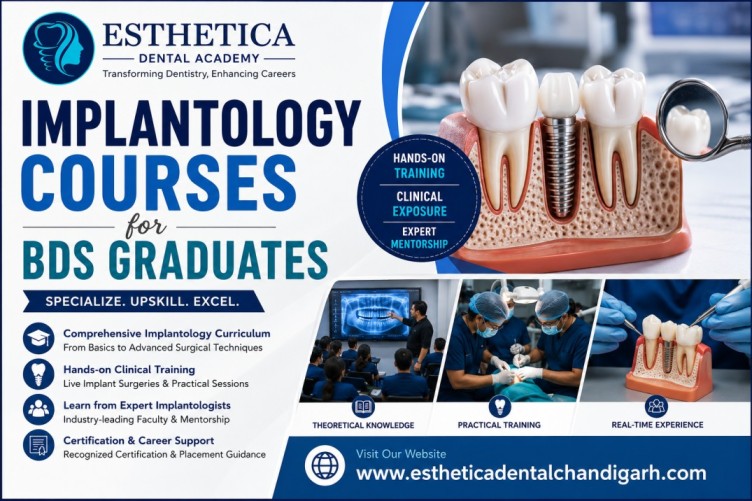
Implantology Courses for BDS Graduates Advanced Clinical Training
For BDS graduates and fresh dentists, choosing the right clinical training after graduation can make a major difference in long-term career growth. Esthetica Dental Academy offers learning opportunities for dentists who want to explore implant dentistry and develop practical knowledge through structured implantology courses for BDS graduates. With dental implants becoming an increasingly important treatment option for replacing missing teeth, gaining specialized implantology skills can help dentists expand their clinical capabilities and confidence.
A BDS degree provides a strong foundation in general dentistry, but many graduates want additional hands-on exposure before independently handling advanced procedures. Implantology training can bridge this gap by introducing dentists to treatment planning, implant placement principles, prosthetic considerations, surgical protocols, and case selection.
Why Consider Implantology After BDS?
Dental implantology is a specialized area that combines surgical knowledge, restorative dentistry, prosthodontic principles, radiographic evaluation, and comprehensive treatment planning. For a fresh BDS graduate, learning these concepts through a structured course can provide a clearer understanding of how implant cases are managed.
Choosing implantology after BDS can also help dentists broaden the range of treatments they can discuss and plan for their patients. Instead of focusing only on conventional tooth replacement options, dentists can understand when implant-supported solutions may be considered.
A good implantology program should not only focus on theoretical concepts. It should also help participants understand clinical decision-making, patient evaluation, complications, and the overall workflow involved in implant treatment.
What Are Implantology Courses for BDS Graduates?
Implantology courses for BDS graduates are specialized educational programs designed to introduce dentists to the fundamentals and clinical applications of dental implant treatment.
Depending on the course structure, training may cover areas such as:
- Fundamentals of dental implantology
- Patient evaluation and case selection
- Medical and dental history assessment
- Clinical examination for implant cases
- Radiographic and diagnostic evaluation
- Implant treatment planning
- Basic surgical principles
- Implant placement concepts
- Prosthetic considerations
- Implant-supported restorations
- Post-operative care
- Common implant complications
- Maintenance and follow-up
- Understanding different implant systems
For fresh dentists, a structured course can provide an organized path to understanding implant dentistry instead of relying only on fragmented information from different sources.
How Implant Training Can Help Fresh Dentists
Starting a dental career immediately after BDS can be challenging because academic education and real-world clinical practice can be different. Dentists often need additional exposure to specialized procedures to develop confidence.
Implant training for dentists can help in several ways.
Develop Better Treatment Planning Skills
Successful implant treatment begins before surgery. Dentists need to evaluate bone availability, oral health, occlusion, periodontal conditions, patient expectations, and other relevant factors.
Training helps dentists understand how these factors influence treatment planning and case selection.
Understand the Complete Implant Workflow
Implant dentistry is not limited to placing an implant fixture. It involves diagnosis, planning, surgical considerations, healing, prosthetic rehabilitation, and maintenance.
A comprehensive course helps dentists understand how these stages connect with one another.
Improve Clinical Confidence
Fresh graduates may hesitate to approach implant cases because they lack specialized training and exposure. Structured education can help improve theoretical understanding and clinical confidence.
However, dentists should always work within their level of competence and follow appropriate clinical protocols when treating patients.
Expand Professional Opportunities
Adding implantology knowledge to a BDS qualification can help dentists develop a broader professional profile. It may also create opportunities to work in practices where implant dentistry is part of the treatment portfolio.
What Should You Look for in Dental Courses After BDS?
There are many dental courses after BDS, so selecting the right program requires careful consideration. A course should match your current experience, learning goals, and future clinical plans.
Before enrolling, consider the following factors:
Practical Exposure
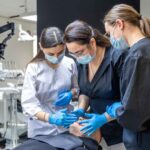
Dental implantology is highly clinical. Look for a program that provides meaningful practical learning opportunities alongside theoretical education.
Experienced Faculty
Faculty experience matters when learning advanced dental procedures. Experienced educators can explain clinical concepts, treatment planning considerations, and common challenges more effectively.
Comprehensive Curriculum
The curriculum should cover more than implant placement. Diagnosis, treatment planning, prosthetics, complications, and maintenance are also important parts of implant dentistry.
Case-Based Learning
Case discussions can help fresh dentists understand how clinical decisions are made in different situations. Reviewing different patient scenarios can strengthen diagnostic and treatment-planning skills.
Appropriate Course Level
Beginners should choose a program that starts with fundamentals rather than assuming extensive implantology experience.
Why Choose Esthetica Dental Academy for Implantology Training?
Esthetica Dental Academy focuses on helping dental professionals build specialized knowledge through structured learning. For BDS graduates and fresh dentists, the right training environment can make complex implantology concepts easier to understand and apply appropriately.
A well-designed implantology program should connect classroom learning with clinical thinking. Rather than simply memorizing procedures, dentists should understand why a particular diagnostic, surgical, or restorative approach may be selected.
At Esthetica Dental Academy, learners can explore important aspects of implant dentistry while developing a stronger understanding of treatment planning and clinical workflows.
For dentists beginning their journey into implantology, this type of structured education can be a useful step toward developing specialized professional skills.
Key Skills You Can Develop Through Implantology Training
A quality implantology program can help dentists strengthen several important skills.
Diagnosis and evaluation: Understanding the information required before considering implant treatment.
Treatment planning: Learning how clinical and radiographic findings contribute to treatment decisions.
Case selection: Recognizing suitable cases and understanding situations that may require additional expertise or treatment.
Surgical principles: Developing foundational knowledge of implant placement and surgical protocols.
Prosthetic awareness: Understanding how implant placement relates to the final restoration.
Complication management: Learning about potential problems and the importance of prevention, monitoring, and appropriate management.
Patient communication: Understanding how to explain implant treatment, expectations, maintenance, and limitations to patients.
These skills can complement the general knowledge gained during BDS and help dentists develop a more specialized approach to patient care.
Is Implantology a Good Career Option After BDS?
For dentists interested in surgical and restorative dentistry, implantology can be a valuable area of specialization. The demand for tooth replacement options continues to make implant dentistry an important part of modern dental practice.
However, completing a short course does not automatically make a dentist an expert implantologist. Implant dentistry requires continuous education, supervised clinical experience where appropriate, sound diagnosis, and adherence to professional standards.
Therefore, dentists should view implantology courses as part of an ongoing learning journey rather than a one-time qualification.
Who Should Enroll in Implantology Courses?
Implantology training may be suitable for:
- BDS graduates interested in implant dentistry
- Fresh dentists looking for additional clinical education
- General dentists wanting to understand implant treatment
- Dentists planning to expand their treatment knowledge
- Dental professionals interested in surgical and restorative procedures
If you are at the beginning of your career, starting with fundamental concepts and gradually progressing toward more advanced cases can provide a more structured learning experience.
Take the Next Step With Esthetica Dental Academy
Choosing the right implantology courses for BDS graduates can be an important step toward building specialized dental knowledge. A combination of theoretical education, practical learning, case discussions, and experienced guidance can help dentists better understand the complete implant treatment process.
If you are a BDS graduate or fresh dentist considering implantology after BDS, explore a structured learning pathway that supports your professional goals. Esthetica Dental Academy can be considered by dentists looking for focused education in implant dentistry and related clinical concepts.
The key is to keep learning, gain appropriate clinical exposure, follow evidence-based protocols, and gradually develop confidence through experience.
Frequently Asked Questions
1. Are implantology courses suitable for BDS graduates?
Yes. Many implantology programs are designed to introduce BDS graduates and general dentists to the fundamentals of implant dentistry. Beginners should select a course appropriate to their current clinical experience.
2. What is covered in implantology courses for BDS graduates?
Course content can vary, but common topics include implant treatment planning, patient evaluation, case selection, radiographic assessment, surgical principles, prosthetic considerations, complications, and maintenance.
3. Why should I consider implant training after BDS?
Implant training can help dentists develop specialized knowledge beyond the BDS curriculum. It may improve understanding of implant treatment planning and provide a foundation for further clinical development in implant dentistry.
4. Are implantology courses suitable for BDS graduates?
Yes, implantology courses are designed to help BDS graduates develop practical knowledge and clinical skills in dental implant placement and treatment planning.
5. What will BDS graduates learn in an implantology course?
Students can learn implant treatment planning, surgical protocols, implant placement, prosthetic considerations, case selection, and hands-on clinical techniques.
6. Do implantology courses include hands-on training?
Many advanced implantology programs include hands-on training and live surgical exposure, allowing BDS graduates to gain practical experience under expert guidance.