







Fellowship in Implantology With Live Surgery Clinical Training
Choosing a fellowship in implantology can be a major step for dentists who want to move from theoretical understanding toward stronger clinical confidence. Implant dentistry requires careful diagnosis, treatment planning, surgical knowledge, prosthetic understanding, and the ability to manage different patient situations.
For many dentists, the real challenge begins when they have to apply classroom knowledge to an actual clinical case. This is why structured hands-on education, supervised procedures, case discussions, and mentorship can be valuable parts of advanced implant training. A practical fellowship can help bridge the gap between learning concepts and understanding how those concepts work in day-to-day dental practice.
Why Is Hands On Implantology Training Becoming So Important?
Dental implants are not identical in every patient. Bone volume, bone density, tooth position, medical history, occlusion, soft tissues, and aesthetic expectations can all influence treatment planning.
A hands-on learning environment allows dentists to understand these variations through real clinical situations. Instead of relying only on textbooks or lectures, participants can observe how experienced clinicians evaluate cases, select treatment approaches, and respond to unexpected findings.
This type of exposure can make advanced concepts easier to understand and remember. It also encourages dentists to think about the complete treatment journey rather than viewing implant placement as an isolated surgical procedure.
What Does a Fellowship in Implantology Usually Teach?
A comprehensive fellowship can cover several stages of implant treatment. The learning journey may begin with patient assessment and radiographic evaluation before progressing toward surgical and restorative concepts.
Important areas may include case selection, treatment planning, implant positioning, surgical protocols, flap design, suturing, implant stability, prosthetic planning, and maintenance. More advanced programs may also introduce bone grafting, guided bone regeneration, sinus lift procedures, ridge expansion, and full-mouth rehabilitation.
The exact curriculum varies between training providers, so dentists should always check the current course structure, clinical exposure, faculty supervision, eligibility, and certification details before enrolling.
How Does Live Surgery Improve Clinical Learning?
Live surgery gives dentists the opportunity to see how treatment planning translates into clinical execution. Before surgery begins, participants can understand the diagnosis, radiographic findings, implant position, surgical sequence, and expected challenges.
During the procedure, they can observe how clinicians manage instruments, surgical access, implant positioning, primary stability, suturing, and other important steps. Postoperative discussions can then connect the procedure with healing, prosthetic planning, and follow-up.
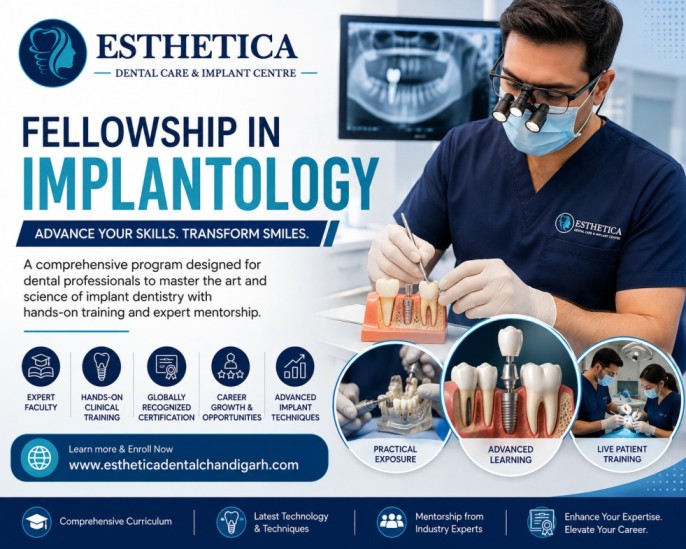
The Esthetica Dental implant fellowship program currently describes live-patient clinical exposure, hands-on sessions, implant placement, bone grafting, and advanced surgical topics as components of its training structure.
What Hands On Skills Can Dentists Develop?
Hands-on training can provide an opportunity to practise techniques in a structured environment before applying them in routine clinical practice. Depending on the program, exercises may include implant placement practice, flap design, suturing, bone grafting techniques, membrane placement, impression techniques, and prosthetic component handling.
This practical approach can help participants understand instruments, surgical sequences, and clinical decision-making more clearly. It also gives learners the opportunity to discuss mistakes or uncertainties with mentors instead of trying to solve every challenge independently.
The goal should not simply be to complete a certain number of procedures. Good training should focus on understanding why a procedure is selected, how it is planned, and when a different approach may be more appropriate.
Why Is Case Planning Important in Implant Dentistry?
One of the most important lessons in implant dentistry is that surgery is only one part of treatment. A carefully planned case can reduce avoidable problems and help create a more predictable restorative outcome.
Case planning may involve clinical examination, photographs, diagnostic models or scans, CBCT assessment when indicated, bone evaluation, implant positioning, restorative requirements, and patient expectations.
Modern implantology increasingly combines digital planning with clinical judgement. Training programs may therefore introduce dentists to digital workflows, radiographic assessment, CAD/CAM concepts, and computer-assisted treatment planning. Esthetica’s fellowship information also highlights CBCT basics and digital dentistry within its program structure.
What Advanced Procedures Can Be Covered?
Dentists who already understand the fundamentals may want exposure to more complex procedures. Advanced implant training can introduce techniques that are useful when conventional implant placement is not sufficient because of limited bone or other anatomical considerations.
Depending on the program, advanced modules may include guided bone regeneration, bone grafting, sinus lift procedures, ridge split or ridge expansion techniques, immediate loading concepts, and full-mouth implant rehabilitation.
These procedures require appropriate case selection and supervision. A fellowship should therefore emphasise clinical judgement and patient safety rather than simply encouraging participants to perform increasingly complex procedures.
Implantology Fellowship India and Global Learning Opportunities
India has become an important destination for continuing dental education because dentists can find programs combining classroom teaching with clinical exposure. Dentists from different countries may also explore Indian training programs when they are looking for practical learning opportunities.
For international dentists, including professionals from Canada, the UK, Australia, and other countries, the most important considerations should be whether the training is suitable for their professional background, whether the certificate has any regulatory value in their home jurisdiction, and whether the clinical activities comply with local professional regulations.
A training certificate should never be assumed to provide a license to practise dentistry in Canada or another country. Canadian dentists should independently verify provincial regulatory requirements before using any overseas training toward professional practice.
Dental Implant Fellowship vs Short Implantology Course
A short implantology course can be useful when a dentist wants an introduction to implant concepts or a focused update on a particular procedure. However, dentists looking for broader clinical exposure may prefer a longer fellowship structure.
A fellowship may provide more time for case discussions, practical exercises, live clinical exposure, surgical observation, prosthetic concepts, and mentorship. The right choice depends on the dentist’s existing experience, learning objectives, available time, and intended clinical scope.
Instead of choosing a program simply because it uses the word “fellowship,” compare the actual curriculum, faculty involvement, hands-on opportunities, clinical cases, assessment methods, and post-course support.
How Can Mentorship Improve Implant Training?
Mentorship is one of the most useful elements of clinical education. A mentor can explain why a particular implant position was selected, how bone quality affects the surgical approach, or why one treatment plan may be preferable to another.
Case-based discussions can also help dentists learn from complications and treatment modifications. This encourages a more thoughtful approach to implant dentistry rather than relying on a fixed procedure for every patient.
The Esthetica Dental implant fellowship page states that its program includes mentorship and clinical guidance, with a focus on live cases and advanced implant procedures.
Who Should Consider Advanced Implant Training?
A fellowship may appeal to BDS graduates, general dentists, and practising dental professionals who want to develop their understanding of implant treatment. However, eligibility should always be confirmed directly with the training provider.
Dentists should also honestly evaluate their current clinical experience. Someone new to implantology may need stronger foundational training before attempting advanced surgical procedures, while an experienced practitioner may benefit from focused training in complex cases or digital workflows.
The best learning pathway is the one that matches the dentist’s current abilities rather than simply selecting the most advanced-looking course.
How Should You Choose an Implantology Fellowship?
When comparing a dental implant fellowship, consider several factors before making a decision. Check whether the program offers genuine clinical exposure, structured hands-on sessions, experienced mentors, case planning, surgical and prosthetic training, and opportunities to discuss complications.
Also review the duration, batch size, location, course fee, learning resources, follow-up support, and certification terms. If you are an international dentist, investigate whether the program aligns with the professional rules applicable in your country.
A strong program should clearly explain what participants will learn, what they will observe or perform, what supervision is provided, and what the certificate actually represents.
What Can Dentists Expect After Completing Training?
Completing a fellowship does not automatically make someone an expert implantologist. Clinical competence develops progressively through education, supervised experience, case evaluation, reflection, and continued professional development.
A fellowship can provide a structured starting point for dentists who want to strengthen their implant knowledge and gain practical exposure. After training, continued learning and appropriate clinical supervision may remain important, particularly when managing complex cases.
Dentists should use their training responsibly and work within their existing professional registration, competence, and applicable regulations.
FAQs
1. What is a fellowship in implantology?
A fellowship in implantology is an advanced continuing-education program designed to help dentists develop knowledge and practical skills related to dental implant treatment. Programs can include lectures, case planning, hands-on exercises, live clinical exposure, surgical concepts, and prosthetic training.
2. Is a fellowship in implantology useful after BDS?
It can be useful for BDS graduates who want to develop their understanding of implant dentistry. However, eligibility, clinical responsibilities, and the appropriate level of training depend on the individual dentist’s experience and professional regulations.
3. What is taught in implantology fellowship programs?
Programs may cover patient assessment, treatment planning, CBCT evaluation, implant placement, prosthetic planning, bone grafting, guided bone regeneration, sinus lift techniques, ridge expansion, suturing, and complication management. Curriculum varies by academy.
4. Why is live surgery important in implant training?
Live surgery allows dentists to observe real clinical workflows and understand how diagnosis, treatment planning, surgical execution, and postoperative management connect. Hands-on participation, when appropriately supervised, can provide additional practical learning.
5. What is the difference between an implantology course and a fellowship?
An implantology course may be short and focused on foundational or specific topics. A fellowship generally suggests a more structured and immersive learning experience, potentially including extended mentorship and clinical exposure. The actual difference depends on the individual program.
6. Can Canadian dentists take an implantology fellowship in India?
Canadian dentists may consider international continuing education, but they should verify the requirements of their relevant Canadian provincial dental regulator before enrolling. An overseas fellowship certificate should not be assumed to provide Canadian licensure, specialist status, or authorization to perform procedures.
7. How do I choose the best dental implant fellowship?
Compare clinical exposure, hands-on training, faculty experience, curriculum, case variety, mentorship, program duration, eligibility, certification, and post-course support. Choose a program that matches your current experience and professional goals.
Take the Next Step Toward Better Implant Clinical Skills
Implant dentistry continues to evolve with digital planning, guided workflows, advanced surgical techniques, and restorative innovations. For dentists who want to keep pace with these developments, structured clinical education can provide an opportunity to strengthen both knowledge and practical understanding.
A well-designed fellowship in implantology should combine evidence-based concepts with meaningful clinical exposure, experienced mentorship, and responsible patient-centred learning. Whether your goal is to introduce implants into your practice or develop more advanced clinical capabilities, carefully choosing the right training pathway can make your learning experience more valuable.
For dentists exploring structured implant education in Mohali and Chandigarh, Esthetica Advanced Dental Academy offers implant-focused training with hands-on learning and live clinical exposure as described in its current program information.