








Dental Implant Fellowship Program
So you’re scrolling through option after option for a Dental Implant Fellowship Program, wondering which one will genuinely make you a better clinician, not just hand you a certificate. You’re not alone. Every year, hundreds of dentists across India, the Middle East, Canada, and beyond search for a program that combines real hands-on exposure with mentorship from someone who has actually placed thousands of implants. That’s exactly what a well-structured Dental Implant Training Program should deliver, and it’s the gap most short weekend courses fail to fill.
Implant dentistry isn’t something you master by watching a few YouTube videos or attending a single-day workshop. It requires structured learning, live patient exposure, and repeated practice under expert supervision. That’s the entire philosophy behind a true fellowship; it’s less about ticking a box and more about walking away with skills you can confidently use in your own clinic from day one.
Why a Dental Implant Fellowship Program Matters More Than Ever
The demand for implant dentistry has exploded globally. Patients no longer want removable dentures or bridges that compromise adjacent teeth, they want implants that look, feel, and function like natural teeth. This shift has created a massive opportunity for dentists, but only for those who are properly trained.
A good Advanced Implant Dentistry Course doesn’t just teach you how to place a fixture. It teaches you how to diagnose correctly, plan digitally, manage complications, and deliver predictable long-term outcomes. Without this depth of training, even experienced general dentists can struggle with case selection, bone grafting decisions, or prosthetic-driven planning — mistakes that directly affect patient trust and clinical reputation.
What Makes an Implant Fellowship Truly “Advanced”
Not every course that calls itself advanced actually is. Here’s what separates a genuinely valuable Dental Implant Fellowship Training from a basic introductory workshop:
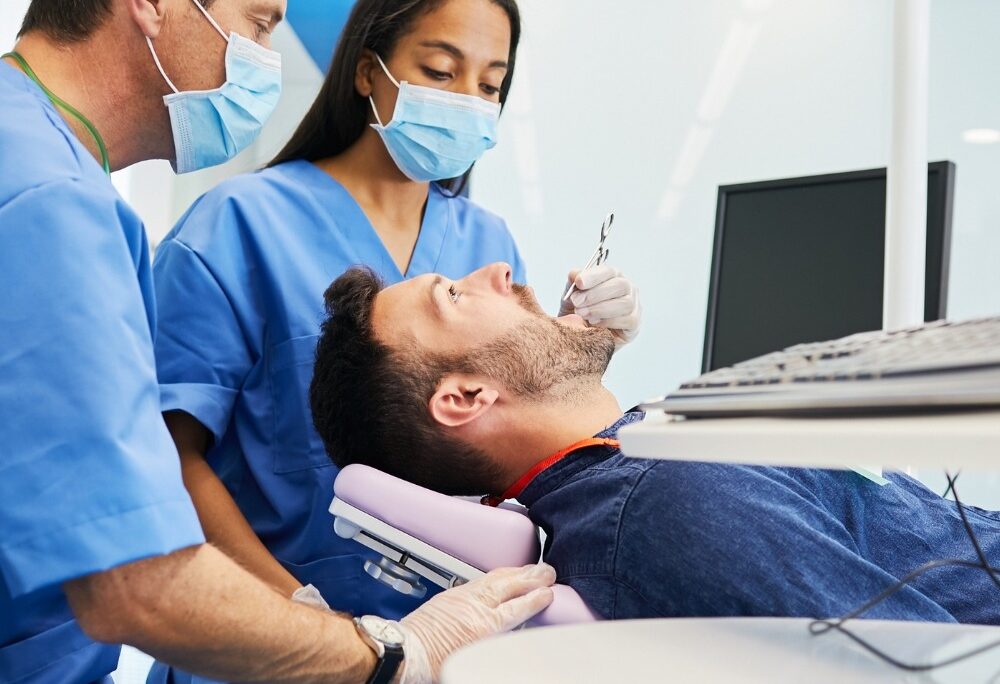
- Live surgical exposure — observing and assisting in real implant placements, not just simulations
- CBCT-guided diagnosis and digital planning — understanding 3D imaging before touching a drill
- Full-arch and All-on-6/All-on-4 protocols — training that goes beyond single-tooth replacement
- Soft tissue management — a skill most short courses completely skip
- Small batch sizes — personalized mentorship instead of being one face in a crowd of fifty
- Case-based learning — real patient scenarios discussed in depth, not just theory slides
If a program checks these boxes, it’s worth your time and investment. If it doesn’t, you’re likely paying for a certificate rather than a skill set.
Who Should Enroll in a Dental Implant Training Program
This kind of fellowship isn’t only for fresh graduates looking to specialize. It’s equally valuable for:
- General dentists wanting to add implants to their practice offerings
- Practicing dentists aiming to refine their surgical precision
- Clinicians preparing to handle complex full-mouth rehabilitation cases
- International dentists, including those practicing in Canada, the US, UK, and the Middle East, who want globally relevant, hands-on Indian training at a fraction of the cost back home
Many dentists from Canada specifically travel to India for advanced implant training because it offers the same clinical rigor often with more live case exposure at a significantly more accessible investment, without compromising on quality or mentorship.
What You’ll Actually Walk Away With
By the end of a well-designed Advanced Implant Dentistry Course, participants typically gain confidence in:
- Independent case planning using digital tools
- Performing implant placements with reduced chairside anxiety
- Managing minor to moderate surgical complications
- Communicating treatment plans clearly to patients
- Building a stronger, implant-focused practice reputation
This is the real return on investment, not the certificate on your wall, but the patients you can now treat with confidence that you couldn’t before.
How to Choose the Right Fellowship Program
Before enrolling, ask yourself a few honest questions. Does the program offer live patient cases, or only mannequin practice? Is the mentor actively practicing implant dentistry, or purely academic? Are batch sizes small enough for individual attention? Is there post-course mentorship support for your early independent cases?
A Dental Implant Fellowship Program worth its cost will answer “yes” to all of these without hesitation.
Esthetica Advanced Dental Academy
This is precisely the training philosophy behind Esthetica Advanced Dental Academy, a program built for dentists who want more than theory. With over a decade of clinical experience, live surgical exposure, small mentorship-driven batches, and hands-on training in full-arch rehabilitation, digital implant planning, and advanced prosthetic workflows, the academy is designed to turn clinical uncertainty into genuine confidence. Whether you’re a general dentist looking to expand into implantology or an international clinician seeking globally relevant, affordable, hands-on training, Esthetica Advanced Dental Academy offers a structured path to becoming a truly skilled implant dentist.
Frequently Asked Questions
1. How long does a Dental Implant Fellowship Program usually take?
Most fellowship programs range from a few days to several weeks, depending on the depth of hands-on surgical exposure and case-based training included.
2. Do I need prior implant experience to join?
No. Most programs, including advanced ones, are structured to accommodate both beginners and practicing dentists looking to refine their existing skills.
3. Is live patient exposure included, or is it only theory-based?
Genuinely advanced programs always include live patient observation and hands-on assistance, not just lecture-based theory sessions.
4. Can international dentists, including those from Canada, join these programs?
Yes. Many Canadian and other international dentists specifically choose Indian implant fellowships for cost-effective, high-quality, hands-on training.
5. What’s the difference between a basic implant course and an advanced fellowship?
Basic courses usually cover single-tooth implant theory, while advanced fellowships include full-arch rehabilitation, digital planning, complication management, and live surgical mentorship.
6. Will I receive a certificate after completing the fellowship?
Yes, most programs provide a completion certificate, though the real value lies in the clinical skills and confidence gained, not the certificate alone.
7. How do I know if a fellowship program is worth the investment?
Look for small batch sizes, live case exposure, an actively practicing mentor, and post-course support, these are the true markers of a valuable program.