









Dental Implants Mohali
A beautiful smile is one of the first things people notice, and losing one or more teeth can affect both your confidence and oral health. Whether your tooth loss is due to an accident, decay, gum disease, or aging, modern dentistry offers a permanent solution that looks, feels, and functions like natural teeth.
If you’re searching for the best Dental Implant Mohali treatment, understanding the procedure, benefits, costs, and recovery process can help you make an informed decision. Dental implants have become the gold standard for replacing missing teeth because they provide unmatched durability, stability, and a natural appearance.
In this comprehensive guide, you’ll learn everything you need to know before choosing dental implants and why they continue to be the preferred tooth replacement option in 2026.
Why Dental Implants Are Becoming the First Choice
Missing teeth are more than just a cosmetic issue. They can make chewing difficult, affect speech, and even lead to bone loss in the jaw. Unlike removable dentures or traditional bridges, dental implants replace both the tooth root and crown, making them a long-lasting solution.
A dental implant consists of three essential components:
- Titanium implant placed inside the jawbone
- Abutment that connects the implant to the crown
- Custom-made dental crown that resembles a natural tooth
Once the implant fuses with the jawbone through a process called osseointegration, it becomes a strong foundation for your replacement tooth.
What Makes Dental Implants Different from Other Tooth Replacement Options?
Many people wonder whether they should choose dentures, bridges, or implants.
Dental implants offer several advantages that make them stand out:
- Permanent and stable solution
- Natural appearance
- Comfortable while eating and speaking
- Helps preserve jawbone density
- Prevents neighboring teeth from shifting
- Can last decades with proper care
- No need for adhesives
- Easy maintenance like natural teeth
Unlike removable dentures, implants do not slip while talking or eating, allowing you to enjoy your favorite foods with confidence.
Who Can Benefit from Dental Implant Treatment?
Dental implants are suitable for many adults who have lost one or more teeth.
You may be an ideal candidate if you:
- Have one or multiple missing teeth
- Possess healthy gums
- Have sufficient jawbone density
- Practice good oral hygiene
- Do not have uncontrolled medical conditions affecting healing
- Want a long-term tooth replacement solution
Even patients with bone loss may still qualify after undergoing bone grafting procedures recommended by their dentist.
Common Reasons People Lose Teeth
Understanding why teeth are lost helps highlight the importance of replacing them promptly.
Some common causes include:
Severe Tooth Decay
Untreated cavities can damage teeth beyond repair, making extraction necessary.
Gum Disease
Advanced periodontal disease weakens the supporting structures around teeth, leading to tooth loss.
Accidents and Injuries
Sports injuries, road accidents, or falls may result in damaged or missing teeth.
Aging
As people age, years of wear and dental problems can contribute to tooth loss.
Failed Root Canal or Crown
In some cases, previously treated teeth cannot be saved and require replacement.
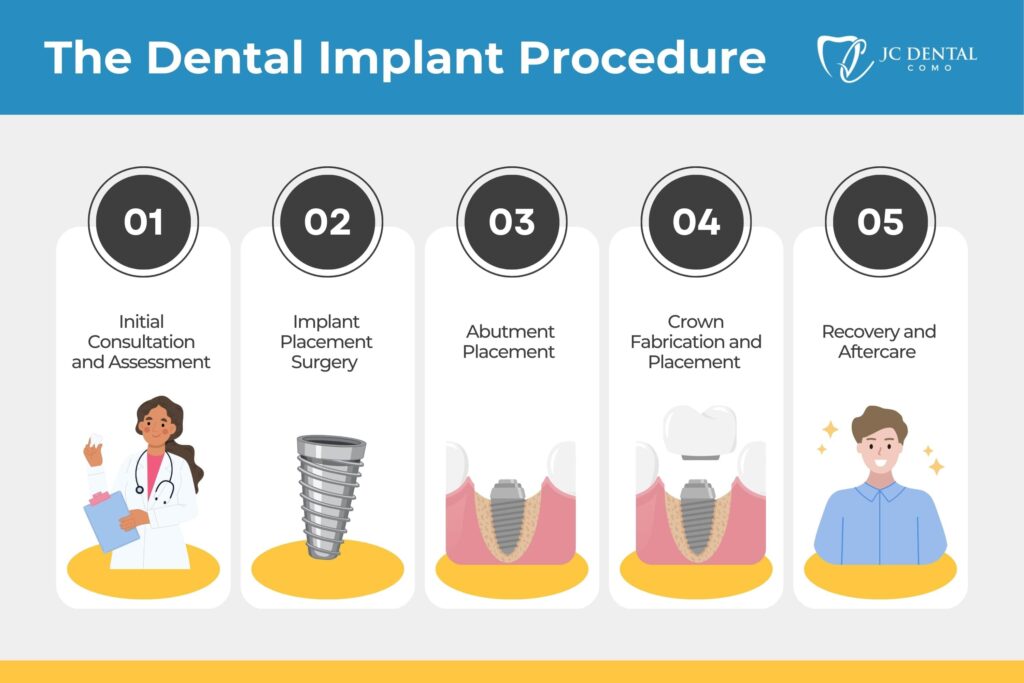
Step-by-Step Dental Implant Procedure
Many patients hesitate because they are unfamiliar with the treatment process. Fortunately, modern implant dentistry is comfortable and highly predictable.
Step 1: Consultation and Examination
The dentist performs a complete oral examination, including digital X-rays and scans, to evaluate bone quality and treatment suitability.
A personalized treatment plan is then created.
Step 2: Implant Placement
The titanium implant is carefully inserted into the jawbone under local anesthesia.
Most patients report very little discomfort during the procedure.
Step 3: Healing Phase
Over the next few months, the implant naturally bonds with the jawbone.
This healing stage creates exceptional strength and stability.
Step 4: Abutment Placement
Once healing is complete, an abutment is attached to the implant.
It serves as the connector between the implant and the final crown.
Step 5: Crown Placement
A custom-designed ceramic crown is placed on top, matching your surrounding teeth in shape, size, and color.
The result is a natural-looking smile that blends perfectly.
Benefits of Choosing Dental Implants
Patients choose implants because they improve both appearance and overall oral health.
Some major benefits include:
Natural Appearance
Modern crowns closely resemble real teeth.
Improved Speech
Unlike loose dentures, implants stay firmly in place.
Better Chewing Ability
Enjoy foods like apples, nuts, and corn without worry.
Long-Term Investment
With proper care, implants can last many years, making them cost-effective over time.
Bone Preservation
Implants stimulate the jawbone and help prevent bone deterioration.
Increased Confidence
Many patients regain their confidence in social and professional situations after treatment.
How Long Do Dental Implants Last?
One of the biggest advantages of implants is their impressive longevity.
With excellent oral hygiene, regular dental check-ups, and healthy lifestyle habits, the implant itself can often last 20 years or more. The crown may eventually require replacement due to normal wear, but the implant foundation is designed for long-term durability.
Is Dental Implant Surgery Painful?
This is one of the most frequently asked questions.
The procedure is performed under local anesthesia, making the surgery itself virtually painless. Mild swelling or discomfort after the procedure is normal and usually subsides within a few days with prescribed medications.
Most patients are pleasantly surprised at how comfortable the experience is compared to what they expected.
How to Care for Your Dental Implants
One of the biggest advantages of dental implants is that they require care similar to your natural teeth. Proper maintenance not only protects your investment but also helps your implants last for many years.
Here are some simple aftercare tips:
- Brush your teeth twice a day using a soft-bristled toothbrush.
- Floss daily to remove plaque around the implant.
- Use an antibacterial mouthwash if recommended by your dentist.
- Avoid chewing hard objects like ice or pens.
- Visit your dentist regularly for professional cleaning and routine check-ups.
- Maintain a balanced diet to support healthy gums and bones.
With proper oral hygiene, dental implants can continue to function and look great for decades.
Factors That Affect Dental Implant Cost
The cost of dental implant treatment varies from person to person because every smile is unique. Several factors influence the overall treatment plan.
These include:
- Number of missing teeth
- Type and quality of implant used
- Need for bone grafting or sinus lift procedures
- Type of dental crown selected
- Digital imaging and diagnostic procedures
- Complexity of the case
- Experience of the implant specialist
Instead of choosing treatment based only on price, patients should focus on quality, safety, advanced technology, and long-term success.
Myths and Facts About Dental Implants
Many people delay treatment because of common misconceptions. Let’s separate myths from reality.
Myth: Dental implants are only for older adults.
Fact: Adults of almost any age with healthy gums and sufficient jawbone may be suitable candidates.
Myth: Implant surgery is extremely painful.
Fact: Modern implant procedures are performed under local anesthesia, making the treatment comfortable for most patients.
Myth: Dental implants look artificial.
Fact: High-quality ceramic crowns are designed to closely match your natural teeth in shape, size, and color.
Myth: Implants require special maintenance.
Fact: Regular brushing, flossing, and routine dental visits are usually enough to keep implants healthy.
Myth: Dental implants fail frequently.
Fact: When placed by experienced professionals and maintained properly, dental implants have an excellent long-term success rate.
Why Experience Matters When Choosing an Implant Specialist
A successful dental implant treatment depends not only on the implant itself but also on careful diagnosis, precise planning, and expert placement.
An experienced implant dentist will:
- Evaluate your oral health thoroughly.
- Use advanced digital imaging for accurate treatment planning.
- Recommend the most suitable implant option.
- Minimize complications during surgery.
- Ensure proper healing and long-term stability.
- Design natural-looking restorations that blend seamlessly with your smile.
Choosing an experienced clinic increases the chances of achieving a comfortable, functional, and aesthetically pleasing result.
Benefits of Replacing Missing Teeth Early
Delaying treatment after losing a tooth can lead to several oral health problems.
Early replacement helps to:
- Prevent jawbone shrinkage.
- Maintain proper bite alignment.
- Avoid shifting of neighboring teeth.
- Improve chewing efficiency.
- Enhance speech clarity.
- Restore facial appearance and confidence.
Replacing missing teeth promptly also reduces the likelihood of requiring more extensive treatments in the future.
Lifestyle Tips to Keep Your Smile Healthy
After receiving dental implants, adopting healthy habits can help maintain both your implants and natural teeth.
Consider these simple lifestyle practices:
- Avoid smoking, as it can slow healing and increase the risk of implant complications.
- Limit sugary foods and beverages.
- Stay hydrated to promote good oral health.
- Wear a mouthguard during sports activities.
- Manage medical conditions such as diabetes with your healthcare provider’s guidance.
- Attend routine dental examinations even if you experience no discomfort.
Healthy daily habits contribute significantly to the long-term success of implant treatment.
Why Dental Implants Are a Smart Long-Term Investment
While the initial cost of dental implants may be higher than some other tooth replacement options, they often provide greater value over time.
Dental implants can:
- Reduce the need for frequent replacements.
- Improve overall oral function.
- Support healthy jawbone structure.
- Enhance facial aesthetics.
- Increase confidence in personal and professional life.
- Offer a durable and reliable solution for missing teeth.
For many patients, the long-term benefits outweigh the initial investment, making dental implants one of the most effective restorative dental treatments available.
Conclusion
A healthy smile plays an important role in both physical health and self-confidence. Dental implants offer a permanent, comfortable, and natural-looking solution for replacing missing teeth. Whether you have lost a single tooth or multiple teeth, modern implant dentistry can help restore your smile, improve chewing ability, and protect your overall oral health.
By consulting an experienced dental professional, following proper aftercare, and maintaining good oral hygiene, you can enjoy the benefits of dental implants for many years.
Investing in your smile today can improve your quality of life for the future.
ESTHETICA DENTAL ACADEMY – Your Trusted Destination for Advanced Dental Implant Care
If you’re looking for expert guidance, advanced technology, and personalized treatment, ESTHETICA DENTAL ACADEMY is committed to delivering high-quality dental implant solutions tailored to your individual needs. From comprehensive consultations to advanced implant procedures and post-treatment care, the experienced team focuses on restoring healthy, confident smiles with precision, comfort, and long-lasting results.
A Message from Dr. Sharad Arya, Founder – Esthetica Dental Academy
When I started Esthetica Dental Clinic in 2012, my vision was simple — to combine clinical excellence with genuine patient care. Over the years, as our practice grew across Punjab, Himachal, and Chandigarh, I realized that the biggest gap in Indian dentistry wasn’t a lack of talent, but a lack of accessible, hands-on implant training for practicing dentists.
That’s why we built Esthetica Dental Academy — not as another certificate mill, but as a mentorship-driven program where dentists actually work on live cases, under supervision, until they’re confident enough to do it on their own. I’ve seen BDS graduates walk in unsure of their surgical skills and walk out ready to plan and execute full-arch implant cases independently.
If you’re serious about growing your implant practice, I’d encourage you to invest in training that prioritizes real clinical exposure over theory alone. That’s the philosophy behind everything we teach here.
— Prof. Dr. Sharad Arya, MDS
Frequently Asked Questions (FAQs)
1. How long does a dental implant last?
With proper oral hygiene, regular dental check-ups, and healthy lifestyle habits, a dental implant can last 20 years or more, while many patients enjoy lifelong results.
2. Is dental implant treatment safe?
Yes. Dental implant treatment is considered a safe and predictable procedure when performed by a qualified and experienced dental professional using modern techniques and high-quality materials.
3. How long does the complete dental implant process take?
The complete treatment timeline depends on individual healing and the complexity of the case. In many situations, the process may take several months, including healing time before the permanent crown is placed.