









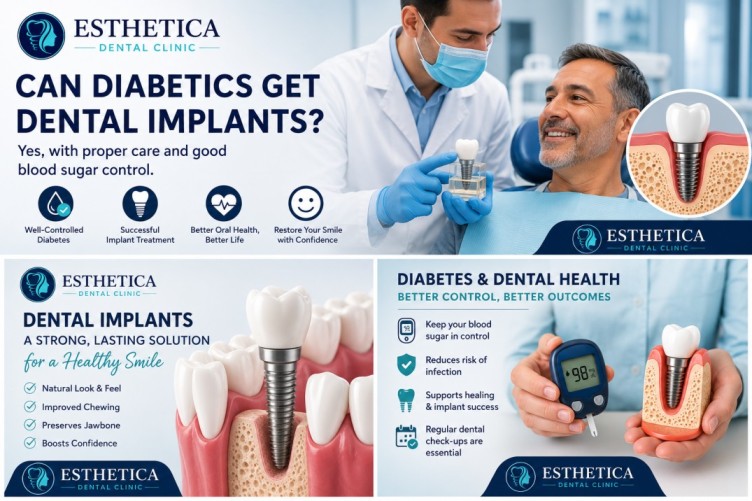
Losing a tooth can affect your confidence, oral health, and daily life. If you have diabetes, you may also wonder whether replacing missing teeth with implants is safe. Many people believe that diabetes automatically makes dental implants impossible, but that is not true. Modern dentistry has made it possible for many diabetic patients to enjoy successful implant treatment with proper planning and good health management.
The answer to Can diabetics get dental implants? is yes. However, the success of the treatment depends on several important factors, including blood sugar control, oral hygiene, and regular dental care. Understanding these factors can help you make an informed decision and achieve long-lasting results.
Whether you have recently lost a tooth or have been considering implants for years, this guide explains everything you need to know in simple language.
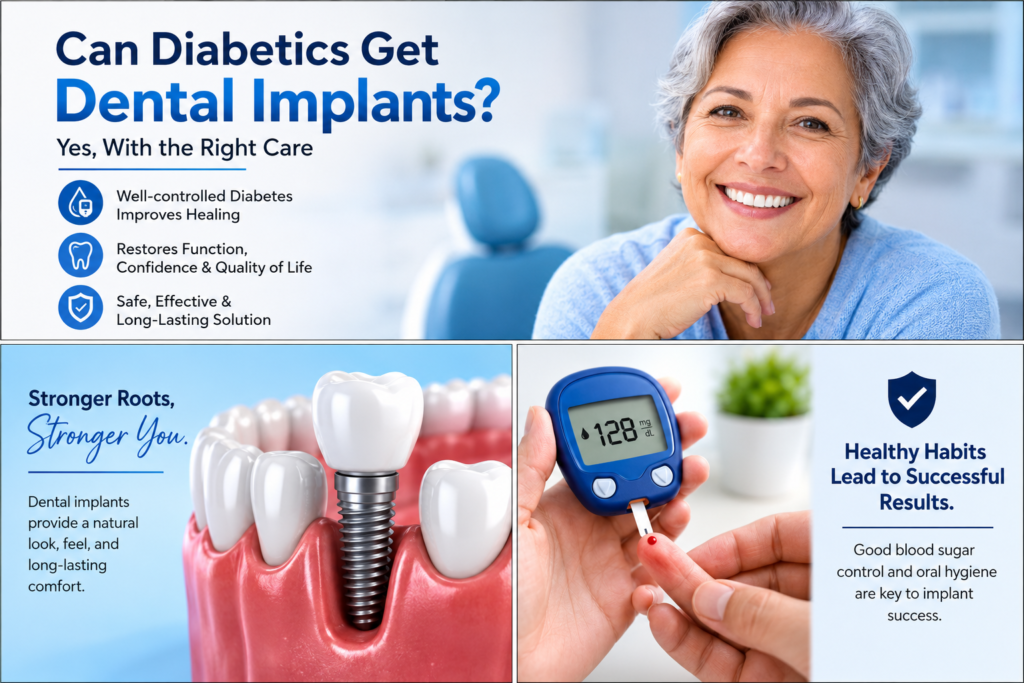
The most common question among diabetic patients is Can diabetics get dental implants? The good news is that most people with well-controlled diabetes are excellent candidates for dental implants.
Dental implants are titanium posts placed inside the jawbone to replace missing tooth roots. After healing, they support crowns, bridges, or dentures that look and function like natural teeth.
Years ago, uncontrolled diabetes was considered a major obstacle to implant treatment because healing was slower and infection risks were higher. Today, improved implant techniques, better diabetes management, and advanced diagnostic tools have significantly increased success rates for diabetic patients.
Many clinical studies show that individuals with controlled diabetes experience implant success rates similar to those without diabetes.
Why Diabetes Can Affect Dental Implant Healing
Diabetes influences how the body heals after surgery. High blood sugar levels can slow tissue repair and reduce the body’s ability to fight infection.
Some common challenges include:
- Delayed wound healing
- Increased risk of gum infections
- Reduced blood circulation
- Higher chance of implant failure if diabetes is poorly controlled
These risks do not mean implants are impossible. They simply highlight the importance of maintaining healthy blood sugar levels before and after the procedure.
Good Blood Sugar Control Makes a Big Difference
One of the biggest factors affecting implant success is blood glucose management.
Dentists often recommend checking your HbA1c level before beginning implant treatment. This test reflects your average blood sugar over the previous two to three months.
Patients with controlled diabetes generally heal faster, experience fewer complications, and enjoy better long-term implant stability.
Following your physician’s advice, taking medications regularly, eating a balanced diet, and monitoring blood sugar all contribute to successful treatment outcomes.
Benefits of Dental Implants for People with Diabetes
Choosing implants offers several advantages beyond replacing missing teeth.
Dental implants help restore normal chewing ability, allowing patients to enjoy a wider variety of nutritious foods. This can support overall health and diabetes management.
Implants also:
- Preserve jawbone density
- Prevent neighboring teeth from shifting
- Improve speech
- Enhance facial appearance
- Increase confidence
- Provide long-lasting stability
Unlike removable dentures, implants feel more like natural teeth and require no adhesives.
Who Is a Good Candidate?
Not every diabetic patient has the same health condition. Your dentist will evaluate several factors before recommending treatment.
A suitable candidate generally has:
- Well-controlled diabetes
- Healthy gums
- Adequate jawbone
- Good oral hygiene habits
- No active infections
- Commitment to follow-up care
A comprehensive examination helps determine whether implants are the best option.
The Dental Implant Procedure Explained
Understanding each stage of treatment can reduce anxiety and help patients prepare.
The process usually begins with a detailed consultation. Digital X-rays and 3D scans allow the dentist to evaluate bone quality and create a customized treatment plan.
The implant is then placed into the jawbone under local anesthesia. Most patients report only mild discomfort during the procedure.
During the following months, the implant gradually fuses with the jawbone through a natural process called osseointegration.
After healing is complete, a custom-made crown is attached, restoring the appearance and function of the missing tooth.
How to Prepare Before Implant Surgery
Preparation plays a major role in successful healing.
Patients should continue managing diabetes carefully before treatment. Eating healthy meals, staying hydrated, sleeping well, and following medication schedules all help the body recover efficiently.
Your dentist may also recommend professional teeth cleaning before surgery to reduce bacteria around the gums.
Smoking should be avoided because it further delays healing and increases implant complications.
Recovery After Dental Implant Placement
Healing varies from one person to another. Most patients experience minor swelling and discomfort for a few days.
Following postoperative instructions carefully can improve recovery.
Soft foods are recommended during the initial healing period. Drinking enough water, avoiding tobacco products, and maintaining excellent oral hygiene are equally important.
Regular follow-up appointments allow the dentist to monitor healing and identify any issues early.
Oral Hygiene Tips for Long-Term Implant Success
Dental implants require daily care similar to natural teeth.
Brush twice each day using a soft toothbrush. Clean between teeth with floss or interdental brushes to remove plaque around the implant.
Routine dental examinations and professional cleanings help maintain healthy gums and extend implant lifespan.
Patients with diabetes should never ignore early signs such as bleeding gums, swelling, or persistent bad breath, as these may indicate infection.
Common Myths About Dental Implants and Diabetes
Many misconceptions prevent diabetic patients from seeking treatment.
One myth is that diabetes always causes implant failure. Modern research has shown that controlled diabetes does not significantly reduce implant success.
Another misconception is that implants are painful. Most patients experience only mild discomfort, which is usually managed with prescribed medication.
Some people also believe dentures are always safer than implants. In reality, implants often provide better stability, comfort, and long-term oral health benefits.
Possible Risks You Should Know
Every surgical procedure involves some level of risk.
Potential complications include delayed healing, infection, gum inflammation, and implant failure. Fortunately, these risks can be minimized through proper diagnosis, blood sugar management, skilled treatment planning, and regular maintenance.
Choosing an experienced dental team greatly improves overall treatment success.
Why Early Tooth Replacement Matters
Missing teeth should not be ignored for long periods.
Over time, bone begins shrinking where the tooth is missing. Nearby teeth may drift into empty spaces, affecting bite alignment and chewing efficiency.
Replacing missing teeth early helps preserve bone structure and reduces the need for more complex treatments later.
Choosing the Right Dental Care Provider
Selecting an experienced implant dentist is essential for diabetic patients.
A thorough consultation, advanced diagnostic technology, personalized treatment planning, and ongoing follow-up care all contribute to predictable results.
The dental team should also communicate with your physician whenever necessary to ensure your diabetes remains well managed throughout treatment.
Esthetica Dental Clinic – Trusted Care for Healthy Smiles
Finding the right clinic can make a significant difference in your implant journey. Esthetica Dental Clinic focuses on personalized treatment planning, advanced implant technology, and patient education to help individuals restore their smiles with confidence. Every treatment plan is carefully designed after evaluating oral health, medical history, and overall healing capacity. With experienced professionals and a patient-first approach, Esthetica Dental Clinic aims to provide comfortable, safe, and long-lasting dental implant solutions for every patient.
Frequently Asked Questions
1. Can diabetics get dental implants safely?
Yes. Patients with well-controlled diabetes can safely receive dental implants after a proper dental evaluation and good blood sugar management.
2. What blood sugar level is considered suitable for dental implants?
Dentists usually evaluate HbA1c levels along with your overall health. Well-controlled diabetes generally offers the highest chance of successful healing.
3. How long do dental implants last in diabetic patients?
With excellent oral hygiene, regular dental check-ups, and controlled diabetes, dental implants can last for many years and often decades.
Restore Your Smile with Confidence at Esthetica Dental Clinic
Living with diabetes should not stop you from enjoying a healthy, complete smile. With proper planning, controlled blood sugar, and expert dental care, implants can provide a reliable and long-lasting solution for missing teeth. If you have been wondering whether implants are the right choice, a professional consultation can help you understand your options and create a treatment plan tailored to your needs. Esthetica Dental Clinic is committed to providing advanced implant care, personalized attention, and lasting results so every patient can smile with confidence again.
Watch this informative video to discover valuable insights, practical tips, and expert guidance that can help you make smarter decisions. Don’t miss the full video below:-