



When patients walk through the doors of a dental clinic, they expect to receive top-tier oral healthcare, ranging from routine cleanings to advanced cosmetic procedures. However, the dental chair is an environment where systemic health and oral care intersect, often under conditions of high patient anxiety. Medical crises can manifest unexpectedly during any dental procedure. This reality highlights why comprehensive medical emergency training for dentists is not just an optional credential, but an absolute operational necessity for modern practitioners.
At Esthetic Dental Chandigarh, patient safety is the foundational pillar of our practice. As a premier dental care facility in the Tri-city area, we recognize that oral health cannot be isolated from systemic health. Dentists are doctors of the oral cavity, and with that title comes the profound responsibility of managing the whole patient. When systemic complications arise—whether due to underlying conditions, stress, or adverse drug interactions—immediate, decisive action is required. Having structured, up-to-date training ensures that dental professionals can accurately recognize early distress signals, stabilize patients, and coordinate effectively with emergency medical services.
The Shifting Demographics and Rising Clinical Risks
The modern dental patient profile has changed dramatically over the last decade. Advances in medicine mean that individuals with complex systemic diseases are living longer, more active lives, and seeking comprehensive dental care. It is increasingly common to treat patients who present with a history of cardiovascular disease, diabetes, chronic obstructive pulmonary disease (CDPD), or severe allergies.
Furthermore, polypharmacy—the simultaneous use of multiple medications—is highly prevalent among older adults. Patients may be taking anticoagulants, beta-blockers, or immunosuppressants, all of which alter the body’s normal physiological responses to stress and dental anesthesia. Without advanced medical emergency training for dentists, evaluating the risks associated with these complex medical histories becomes a dangerous guessing game. Practitioners must understand how a patient’s daily medications interact with local anesthetics and vasoconstrictors like epinephrine to prevent catastrophic hypertensive crises or prolonged bleeding episodes.
Why Medical Emergency Training for Dentists Saves Lives in the Chair
The dental environment inherently introduces triggers that can destabilize a medically compromised patient. Fear, anxiety, and pain stimulate the sympathetic nervous system, releasing endogenous catecholamines (adrenaline). This sudden surge can easily precipitate an emergency in patients with pre-existing cardiac conditions.
1. Stress-Induced Syncope and Hyperventilation
Vasovagal syncope (fainting) is the most frequent emergency encountered in dental offices. While often benign, syncope can mimic or trigger more severe conditions, such as cardiac arrhythmias or transient ischemic attacks (TIAs). Proper training teaches dental teams how to differentiate between a simple faint and a neurological deficit, ensuring the patient is positioned correctly (Trendelenburg position) and oxygenated promptly. Similarly, acute hyperventilation due to severe dental phobia can alter blood chemistry, leading to respiratory alkalosis and muscle spasms, requiring immediate psychological and physical intervention.
2. Cardiovascular Crises: Angina and Myocardial Infarction
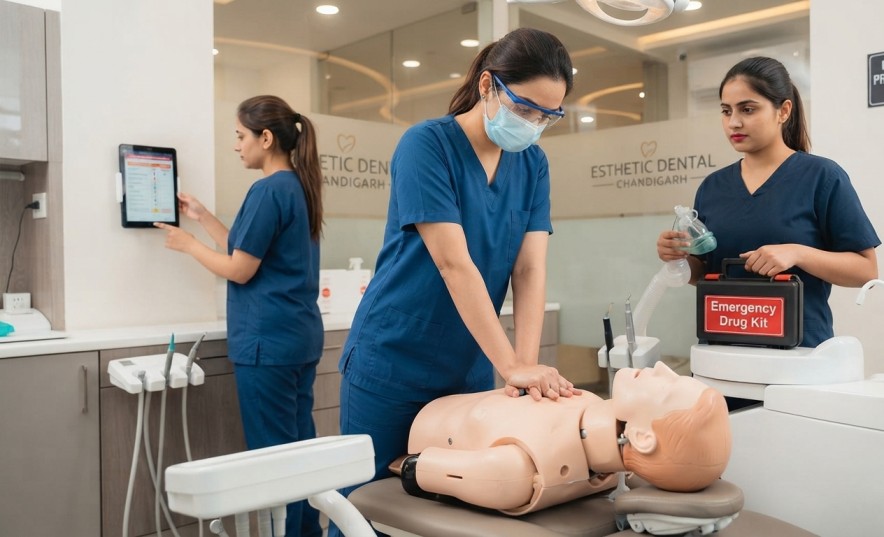
For a patient with ischemic heart disease, the stress of a extraction or root canal can cause an imbalance between myocardial oxygen supply and demand, leading to acute angina or a full myocardial infarction (heart attack). Through rigorous medical emergency training for dentists, clinicians learn to rapidly administer nitroglycerin, chewable aspirin, and supplemental oxygen while monitoring vital signs. In the worst-case scenario of sudden cardiac arrest, the immediate deployment of Cardiopulmonary Resuscitation (CPR) combined with an Automated External Defibrillator (AED) within the first three minutes is the single biggest factor determining survival.
3. Adverse Allergic Reactions and Anaphylaxis
Dental materials, antibiotics, and local anesthetics can occasionally trigger severe hypersensitivity reactions. Anaphylaxis is a life-threatening, rapidly progressing emergency characterized by airway swelling, bronchospasm, and a profound drop in blood pressure. Dentists must be trained to recognize the early signs of cutaneous flushing and respiratory distress, allowing them to confidently administer intramuscular epinephrine without delay.
Common Systemic Emergencies and Immediate Dental Protocols
| Emergency Type | Clinical Signs & Symptoms | Immediate First-Line Intervention |
| Vasovagal Syncope | Pallor, sweating, dizziness, sudden loss of consciousness. | Place patient supine with legs elevated; administer spirits of ammonia if required; monitor vitals. |
| Anaphylaxis | Urticaria, facial swelling, wheezing, profound hypotension. | Call emergency services; administer intramuscular Epinephrine (1:1000) immediately; give oxygen. |
| Hypoglycemia | Confusion, tremors, diaphoresis, altered mental state. | Administer oral glucose (juice/paste) if conscious; IV dextrose or glucagon if unconscious. |
| Asthma Attack | Dyspnea, expiratory wheezing, use of accessory respiratory muscles. | Administer 2-4 puffs of a rescue bronchodilator (Albuterol); seat patient upright. |
| Angina Pectoris | Crushing substernal chest pain radiating to the left arm or jaw. | Administer sublingual Nitroglycerin; monitor blood pressure; give supplemental oxygen. |
Legal, Ethical, and Regional Responsibilities in Chandigarh
Beyond the clinical imperative, there is a clear legal and ethical mandate governing emergency preparedness. Regulatory bodies worldwide, including the Dental Council of India (DCI), emphasize that emergency management is a core competency. Failing to maintain an updated emergency kit, neglecting to monitor vital signs, or demonstrating an inability to manage a basic crisis can leave a practitioner vulnerable to severe legal liabilities and medical malpractice lawsuits.
Operating a clinic in Chandigarh introduces specific regional advantages and responsibilities. Chandigarh boasts a highly developed medical infrastructure, featuring world-class emergency networks such as the Post Graduate Institute of Medical Education and Research (PGIMER), Government Medical College and Hospital (GMCH-32), and elite private tertiary care hospitals. However, even with rapid ambulance transit times, the definitive care window during an airway obstruction or anaphylactic shock is measured in seconds, not minutes. The dental team at Esthetic Dental Chandigarh serves as the critical first line of defense, stabilizing the patient during those golden minutes before emergency medical services arrive on site.
Designing a Bulletproof Emergency Preparedness Protocol
True emergency preparedness extends far beyond the principal dentist; it requires a highly synchronized team effort. A crisis situation is not the time to discover that an oxygen tank is empty or that the emergency drugs have expired.
The Specialized Emergency Medical Kit: Every dental office must maintain a dedicated, easily accessible emergency kit containing essential drugs such as Epinephrine, Nitroglycerin, Albuterol, Aspirin, Diphenhydramine, and Glucose. This kit must be audited monthly to replace expired medications.
Routine Mock Drills: Knowledge decays without practice. Dental teams should conduct unannounced mock emergency drills quarterly. Assigning specific roles—such as who calls the ambulance, who retrieves the emergency kit, and who records vital signs—ensures absolute order during an actual crisis.
Advanced Diagnostic Monitoring: Incorporating routine pre-operative screening, including blood pressure monitoring and blood glucose checks for diabetic patients, allows clinicians to postpone elective procedures if a patient falls into a high-risk category.
The Esthetic Dental Chandigarh Promise of Safety
At Esthetic Dental Chandigarh, we believe that an exceptional smile should never come at the expense of systemic safety. Our clinical facility is fully equipped with state-of-the-art monitoring equipment, oxygen delivery systems, and emergency pharmacology. Our clinical team undergoes continuous updates in Basic Life Support (BLS) and advanced emergency protocols. By maintaining an uncompromising standard of readiness, we ensure that our patients can undergo complex cosmetic, implant, and restorative therapies with absolute peace of mind, knowing they are in highly trained, capable hands.
Frequently Asked Questions (FAQ)
Why is medical emergency training for dentists considered a mandatory requirement today?
The patient population is changing, with more medically compromised individuals and elderly patients requiring complex dental procedures. Because dental treatment inherently causes stress and involves local anesthetics, the risk of systemic complications is real. Dentists must be trained to stabilize life-threatening situations until emergency services take over.
What are the most common medical emergencies that happen during dental treatment?
The most frequent emergencies include vasovagal syncope (fainting), mild to severe allergic reactions, hyperventilation, asthmatic bronchospasms, hypoglycemic episodes in diabetic patients, and cardiovascular issues like angina or sudden cardiac arrest.
How often should a dental team undergo emergency training updates?
While official certifications like Basic Life Support (BLS) are typically renewed every two years, best clinical practices dictate that the entire office team should perform hands-on mock drills quarterly to keep their response skills sharp and fully coordinated.
What essential equipment should a modern dental clinic possess for medical crises?
A prepared dental clinic must have an updated emergency drug kit, a fully operational oxygen delivery system with positive-pressure capability, appropriate airways, a blood pressure monitor, a pulse oximeter, and an Automated External Defibrillator (AED).
How does Esthetic Dental Chandigarh ensure patient safety during procedures?
Esthetic Dental Chandigarh implements strict pre-operative health screenings, continuously monitors vital signs for at-risk patients, maintains a fully compliant emergency medical infrastructure, and ensures all clinical staff are regularly trained in advanced crisis response management.