









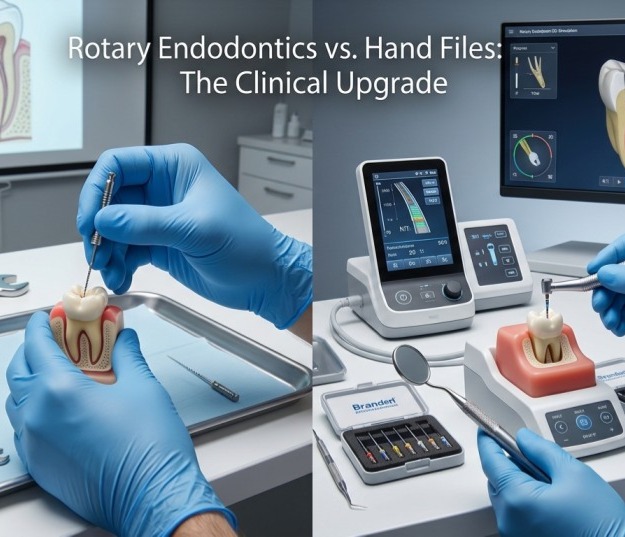
In the evolving field of endodontics, the debate between traditional manual instrumentation and rotary endodontics is more than just a preference; it is a fundamental shift in clinical philosophy. As modern dentistry demands higher efficiency, precision, and patient comfort, the tools we use in the root canal system define the outcome. For clinicians looking to elevate their practice, understanding the transition from hand files to rotary endodontics is essential for modern, high-standard care.
Understanding the Techniques
The Tradition of Hand Files
For generations, hand files—typically made of stainless steel—were the gold standard. They require the clinician to manually manipulate the file within the canal, using a push-pull or watch-winding motion. While hand files provide excellent tactile feedback, they are limited by their rigidity and the time required to navigate complex, curved anatomy.
The Precision of Rotary Endodontics
Rotary endodontics utilizes nickel-titanium (NiTi) files attached to a specialized electric handpiece. The “rotary” action allows the file to perform the cleaning and shaping process mechanically. NiTi, as a material, is significantly more flexible than stainless steel, allowing the instrument to follow the natural curvature of the root canal system with less risk of ledge formation, transportation, or perforation.
Why Rotary Endodontics is a Necessary Upgrade
Upgrading to a rotary-driven workflow is not just about keeping pace with technology; it is about significantly improving the clinical quality of your endodontic procedures.
1. Superior Efficiency and Predictability
In a busy clinical environment, time is a critical resource. Rotary systems are designed to negotiate canals faster than manual files. Because the mechanical action is consistent, the shaping process becomes more predictable. This allows clinicians to complete complex cases in a shorter chair time without compromising on the thoroughness of the cleaning.
2. Enhanced Safety and Anatomy Preservation
One of the greatest fears in endodontics is stripping or transporting a canal. Hand files, due to their stiffness, often attempt to straighten the canal as they cut. Rotary NiTi files are engineered for flexibility, allowing them to remain centered within the canal space. This ensures that the original anatomy of the tooth is preserved, which is vital for the long-term success of the root canal treatment.
3. Improved Patient Experience
The reduced chair time inherent in rotary systems directly benefits the patient. A shorter, more comfortable procedure means less fatigue for the patient while keeping their mouth open, and a significantly more pleasant experience during what is often perceived as a “dreaded” procedure. By decreasing the duration of the treatment, you can actively reduce patient anxiety.
Clinical Benefits at a Glance
| Feature | Hand Files | Rotary Endodontics |
| Flexibility | Low (Stainless Steel) | High (Nickel-Titanium) |
| Procedure Time | Longer | Faster |
| Canal Centering | Lower accuracy | High accuracy |
| Learning Curve | Gentle | Steeper (requires training) |
| Patient Comfort | Moderate | High |
Overcoming the Learning Curve
It is often cited that rotary endodontics carries a steeper learning curve than hand files. However, this is where specialized training becomes the catalyst for growth. For professionals committed to academic and clinical excellence, transitioning to rotary systems is an investment in skill acquisition that pays dividends in patient satisfaction and long-term prognosis.
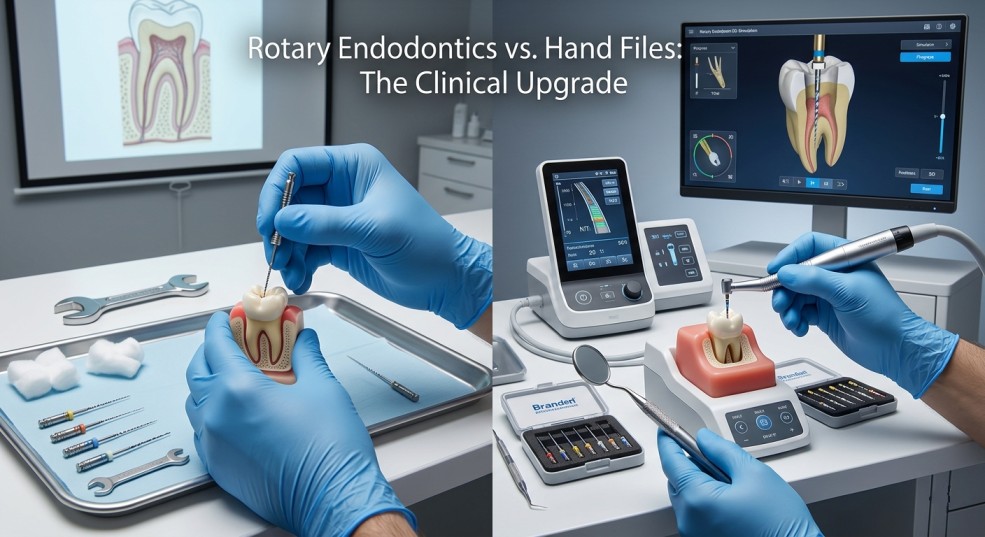
By mastering rotary systems, clinicians can handle complex calcified canals, severe curvatures, and retreatments with a level of confidence that hand files simply cannot offer in the same timeframe.
Final Verdict: Time to Upgrade?
If your goal is to provide world-class dental care and improve your clinic’s throughput, the shift to rotary endodontics is a logical, necessary step. While hand files may still have their place for initial scout filings, the bulk of your instrumentation should be performed with a rotary system to ensure the highest standards of safety and precision.
At Esthetica Dental Clinic, we prioritize integrating such advanced workflows to ensure every patient receives the best possible care. Whether you are looking to refine your own techniques or are seeking a provider who uses the latest in endodontic technology, prioritizing rotary systems is the hallmark of a modern, forward-thinking dental practice.