








Why Student-to-Faculty Ratio Matters in Hands-On Dental Training
One important aspect that is often not considered while selecting a dental institute is the ratio between students and faculty in dental training. This aspect is important because it will affect the amount of attention each student receives during training, especially in hands-on training sessions.
What is the concept of the student-to-faculty ratio in dental training?
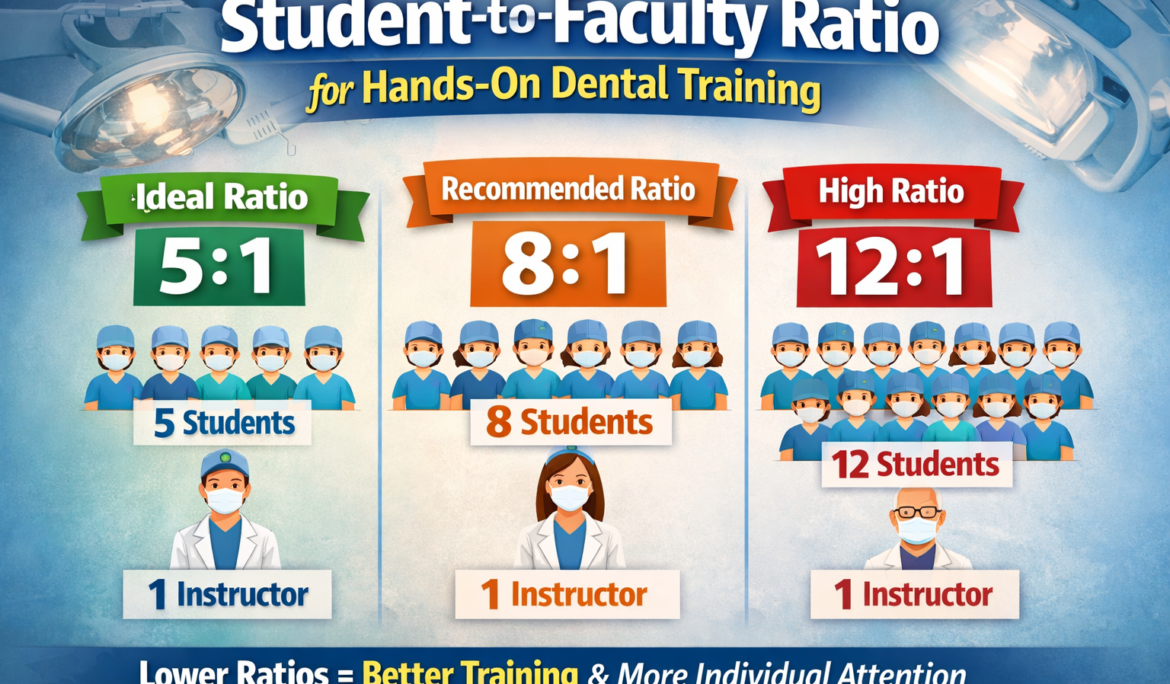
Student-to-faculty ratio in dental training is the number of students a particular instructor or mentor is expected to handle during classes and clinical practice. For instance, in a 10:1 ratio, there is one instructor for ten students. The lower the ratio, the better, as the instructor is in a position to supervise the students during the proced
Importance of Low Ratio in Hands-On Practice
Hands-on dental practice is about precision and technique. A low student-faculty ratio in dental practice ensures that instructors have a close eye on what the student is doing and can correct them instantly. This improves student skill levels and increases their confidence before they start practicing on real patients.
Better Learning Experience and Skill Development
Having a well-managed student to faculty ratio in dental education results in an interactive learning experience. This allows students to feel comfortable asking questions, discussing, and seeking clarification. This improves knowledge as well as skills, which are important in dentistry.
Why Student-to-Faculty Ratio Matters in Hands-On Dental Training
One important aspect that is often not considered while selecting a dental institute is the ratio between students and faculty in dental training. This aspect is important because it will affect the amount of attention each student receives during training, especially in hands-on training sessions.
What is the concept of the student-to-faculty ratio in dental training?
Student-to-faculty ratio in dental training is the number of students a particular instructor or mentor is expected to handle during classes and clinical practice. For instance, in a 10:1 ratio, there is one instructor for ten students. The lower the ratio, the better, as the instructor is in a position to supervise the students during the proced
Importance of Low Ratio in Hands-On Practice
Hands-on dental practice is about precision and technique. A low student-faculty ratio in dental practice ensures that instructors have a close eye on what the student is doing and can correct them instantly. This improves student skill levels and increases their confidence before they start practicing on real patients.
Better Learning Experience and Skill Development
Having a well-managed student to faculty ratio in dental education results in an interactive learning experience. This allows students to feel comfortable asking questions, discussing, and seeking clarification. This improves knowledge as well as skills, which are important in dentistry.
Why Student-to-Faculty Ratio Matters in Hands-On Dental Training
One important aspect that is often not considered while selecting a dental institute is the ratio between students and faculty in dental training. This aspect is important because it will affect the amount of attention each student receives during training, especially in hands-on training sessions.
What is the concept of the student-to-faculty ratio in dental training?
Student-to-faculty ratio in dental training is the number of students a particular instructor or mentor is expected to handle during classes and clinical practice. For instance, in a 10:1 ratio, there is one instructor for ten students. The lower the ratio, the better, as the instructor is in a position to supervise the students during the proced
Importance of Low Ratio in Hands-On Practice
Hands-on dental practice is about precision and technique. A low student-faculty ratio in dental practice ensures that instructors have a close eye on what the student is doing and can correct them instantly. This improves student skill levels and increases their confidence before they start practicing on real patients.
Better Learning Experience and Skill Development
Having a well-managed student to faculty ratio in dental education results in an interactive learning experience. This allows students to feel comfortable asking questions, discussing, and seeking clarification. This improves knowledge as well as skills, which are important in dentistry.
Impact on Patient Safety and Clinical Exposure
In dental training programs, students often work on real patients under supervision. A lower student to faculty ratio in dental training ensures that every procedure is carefully overseen by experienced professionals. This minimizes risks, ensures patient safety, and allows students to gain meaningful clinical exposure without compromising quality
Ideal Student to Faculty Ratio in Dental Institutes
The ideal student to faculty ratio may differ, but the general consensus is that the top dental institutes prefer a student to faculty ratio between 5:1 and 10:1 during clinical sessions. This is considered an ideal student to faculty ratio in dental training. The student to faculty ratio in dental training plays a very important role in the career of the student.
How It Shapes Your Future as a Dentist
The quality of your training will shape your future success as a dentist. A well-balanced ratio between students and faculty in your dental training will ensure that you graduate with skills and confidence to tackle real-world dental cases.
Understanding the Concept of Student-to-Faculty Ratio
Student to faculty ratio in dental training simply means the number of students that are supervised by one instructor in the classroom. For instance, a ratio of 10:1 means that one instructor is in charge of ten students in the classroom. It is important to note that the lower the ratio, the better, as the students are given adequate attention in the classroom.
Enhances Learning and Confidence
A low student-faculty ratio in dental training ensures an effective learning environment for the students. This allows them to feel comfortable in asking questions and actively participating in discussions. This enables them to learn better through effective interaction and become confident in performing tasks independently.
Improves Patient Safety and Clinical Exposure
In a clinical setting, a student may be required to attend to a real patient. A good student-to-faculty ratio in dental training ensures that a procedure is well supervised. This is crucial for patient safety, as well as providing a student with a real-life exposure.
What is the Ideal Ratio?
The ideal ratio for the students and the faculty members in the dental training programs in the most renowned dental institutes lies between 5:1 and 10:1.
What Does Student to Faculty Ratio Really Mean?
The student to faculty ratio in dental training is simply the number of students that a given faculty member or instructor is required to handle. This means that in a given student-faculty ratio of 10:1, for example, one teacher is required to handle ten students. However, the actual meaning of this number is realized in the clinic where dental practice is required.
Why Hands-On Training Needs a Low Ratio
Dentistry is a skillful profession that requires precision. When performing certain procedures such as tooth preparation, scaling, and restoration, students require close supervision. A low student to faculty ratio in dentistry training allows instructors to supervise each step of a student’s activity, correct mistakes, and offer personal advice. This cannot be fully achieved in a high student to faculty ratio.
Better Interaction Leads to Better Learning
A balanced student-to-faculty ratio is essential in dental training, where students can freely interact with their teachers. This promotes better learning, where students can freely ask questions and discuss various issues, thus enhancing their knowledge. Interaction is essential, whether theoretical or practical.
Ensuring Patient Safety During Clinical Practice
In dental colleges, students are given the opportunity to practice on real patients, albeit under supervision. The student-to-faculty ratio in the training of dental students is important in the sense that it helps in the proper supervision of cases, hence limiting the chances of error in the practice of students, thereby giving them the confidence to handle real-life cases in the field of dentistry.
Ideal Student to Faculty Ratio to Achieve Optimal Results
The student to faculty ratio in dental education at top-class dental institutes remains between 5:1 to 10:1, particularly during practical sessions. This enables faculty members to devote adequate time to each student while also ensuring that each student receives adequate practical exposure. Institutes that operate at a high student to faculty ratio might find it difficult to provide quality education to their students.
Long-Term Impact on Your Dental Career
The quality of your dental training is instrumental in ensuring your success in the future as a dentist. A good student-faculty ratio in dental training is essential in helping you build important skills as a dentist. You are able to build important skills as a dentist through good student-faculty ratios in dental training.
Student to Faculty Ratio in Dental Training: The student to faculty ratio in dental training is not just a number, but rather a critical measure of the quality of education. Therefore, while choosing a dental college, this aspect needs to be carefully considered.
Choosing the Right Institute: Choosing the right institute is one of the major steps towards a successful dental career. While choosing a dental institute, one needs to carefully consider the student to faculty ratio in dental training. This would ensure better mentorship, practical skills, and confidence, thus making you a successful dentist.